Pomeranian training: tips for puppies and adult Pomeranians
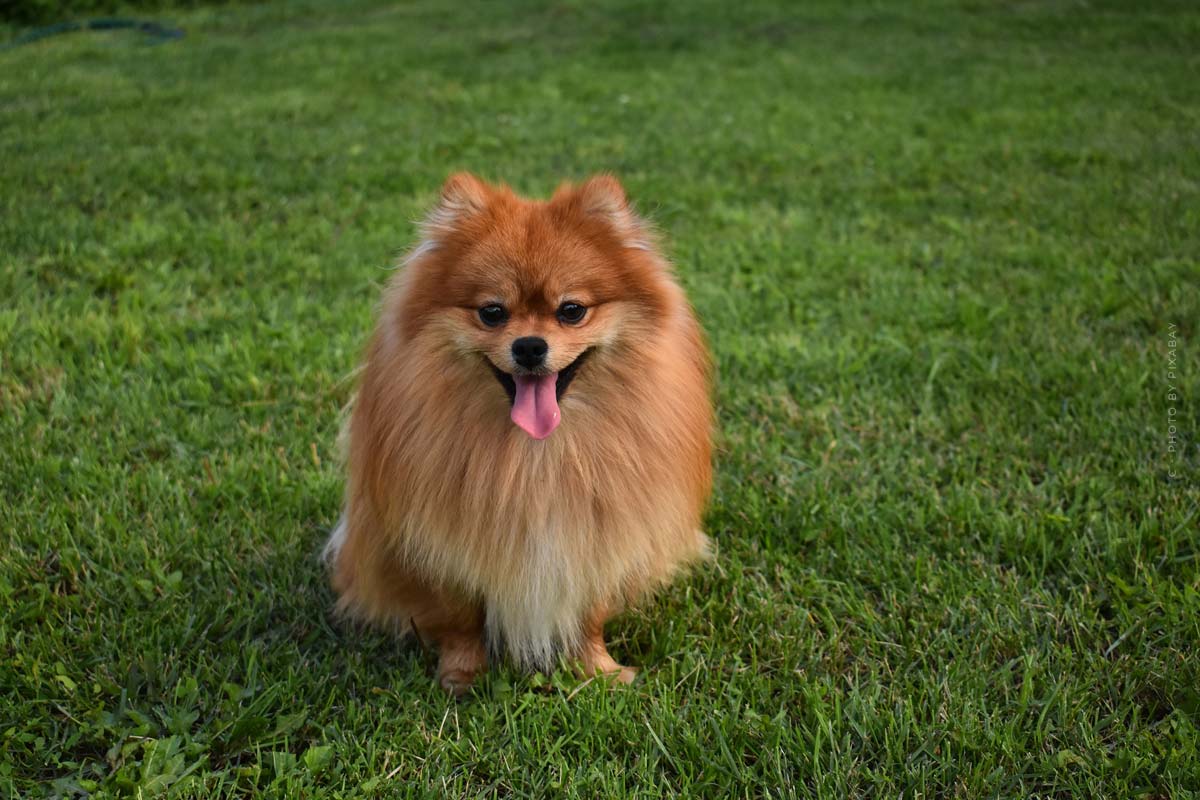
The Pomeranian is smart, eager to learn and affectionate – but it needs clear rules and consistent leadership. If you approach Pomeranian training correctly from the outset, you will get a dog that fits perfectly into family and city life. More about the breed in the large Pomeranian overview.
When should education begin?
Immediately – from the first day the puppy moves in. No matter how cute the little Pomeranian is, consistency from the very beginning is crucial. What you allow the puppy to do, the adult dog will take for granted. The first 12 weeks are the most sensitive imprinting phase – this is when the dog learns the fastest.
Basic commands for Pomeranian puppies
Every Pomeranian should master these five commands – learn them in this order:
- Sit: The simplest command, always first. Reward with treats and praise.
- Place: Based on seat, important for peace and quiet in public
- Stay: patience exercise – first short distance, then longer
- Come / Here: Lifesaving – must function absolutely reliably
- Off / No: Clear limit, calm but firm voice
Positive reinforcement: Why punishments don’t work
Pomeranians are extremely sensitive to pressure and punishment. Loud shouting, physical corrections or yelling at this breed lead to withdrawal, mistrust and, in the worst case, fear biting. What works: Positive reinforcement – reward (treats, praise, play) immediately after the desired behavior. The dog learns: This reaction brings good things.
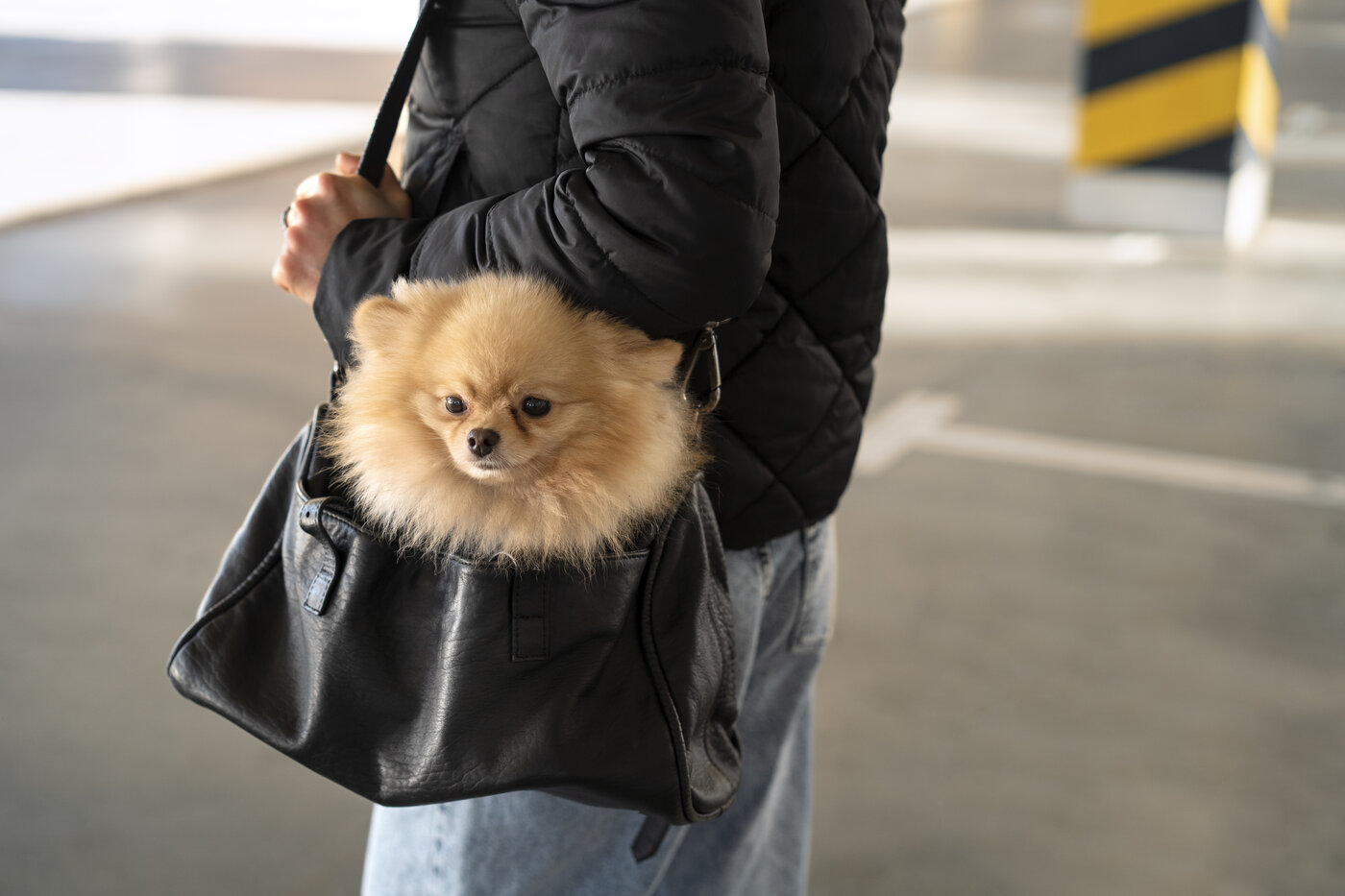
Socialization: What Pomeranian puppies need to experience
Puppies that gather many different impressions between the 3rd and 12th week of life become self-confident dogs. Important socialization points for Pomeranians:
- Other dogs (different sizes) – particularly important as Poms are often perceived as prey by larger dogs
- Children, strangers, crowds of people
- City noise: cars, bicycles, trains, music
- Various floor coverings: Asphalt, grass, grating, stairs
- Vet visits without treatment (just sniffing and treats)
House-training the Pomeranian
Pomeranians are known for their small size – and unfortunately also for the fact that housetraining requires more patience than with larger breeds. Puppy bladders are small, the urge to urinate is frequent. Rule of thumb: go out every 1-2 hours, directly after sleeping, after eating and after playing. No scolding in the event of accidents – wipe up calmly, avoid eye contact, react more quickly the next time.
Typical parenting problems and solutions
- Barking: Pomeranians are very alert by nature. Identify the cause (fear, excitement, boredom) and work on it specifically – teaching “Speak!” helps to control the barking
- Small dog syndrome: Small dogs are often treated too much like babies. Clear rules apply equally to all dogs – no matter how small
- Separation anxiety: practise short periods alone from day 1. Never say goodbye or hello dramatically
Pomeranian education in video
Buy Pomeranian: Prices, breeders & costs at a glance
Pomeranian colors: All coat colors of the Pomeranian at a glance

Retinol: effect, application and the best products for radiant skin

Hair care: hair care tips, hair care routine, & more

Facial care: Facial cleansing, facial care routine & tips
Camping online shops: 9 shops and outlets for tents, accessories, furniture & Co.