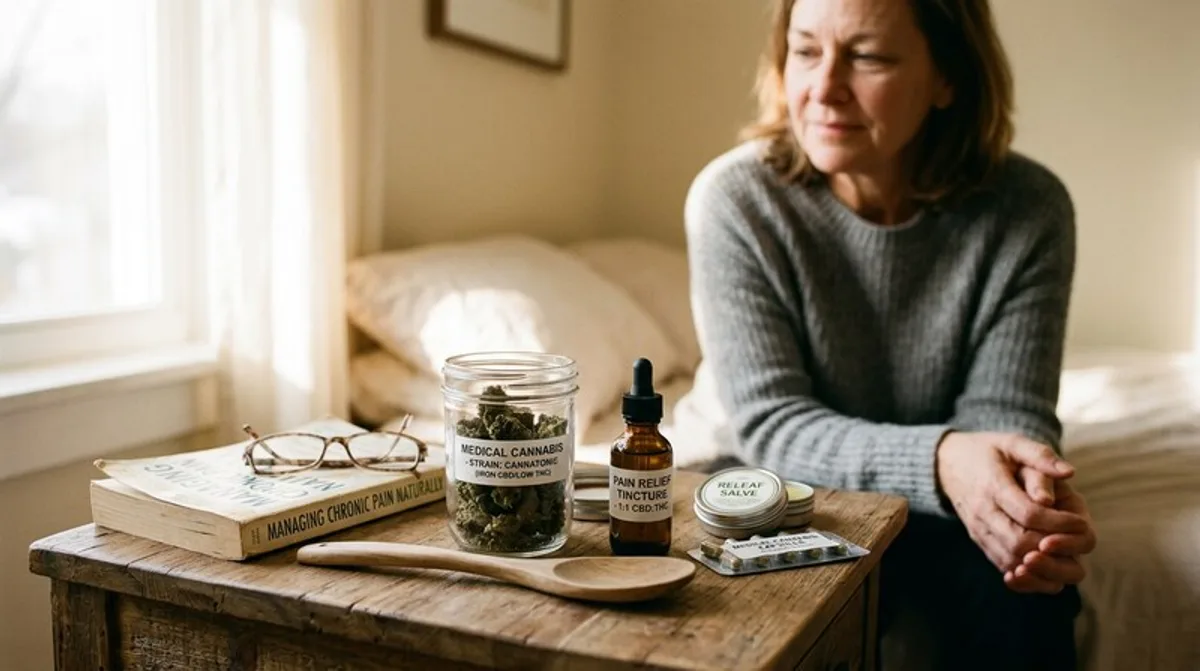
Cannabis for back pain: CBD, THC & intervertebral discs
- Cannabis simultaneously targets all 4 types of pain: nociceptive, neuropathic, myofascial, centralized
- 97% of patients who replaced opioids preferred cannabis – 81% found it more effective solo (Reiman 2017)
- Topical (CBD cream): direct CB2 effect on muscle and fascia without systemic effects
Back pain: the most common pain problem in Germany
Chronic back pain permanently affects 15-17% of adults in Germany. It is the most common cause of incapacity for work and one of the most expensive illnesses in the healthcare system. Back pain is pharmacologically complex: nociceptive pain (tissue damage), neuropathic pain (nerve root compression), myofascial pain (muscle tension) and centralized pain (chronification) often overlap.
Cannabis intervenes via several mechanisms simultaneously – which makes it interesting for this complex pain pattern.
Pain mechanisms in back pain and ECS targets
| Pain type | Mechanism | Cannabis effect |
|---|---|---|
| Nociceptive pain (tissue damage) | Prostaglandin activation, inflammatory mediators | CBD: COX-2 inhibition, CB2 anti-inflammation |
| Neuropathic pain (nerve root) | Sensitization of spinal neurons, TRPV1 overactivation | CBD: TRPV1 desensitization; THC: CB1 in the spinal cord |
| Myofascial pain (muscles) | Continuous contraction, trigger points | THC: muscle relaxation via CB1 |
| Centralized pain (chronification) | Overactivation of descending pain pathways | THC + CBD: Modulation of supraspinal pain processing |
Studies: Cannabis and back pain
Aviram & Samuelly-Leichtag 2017 (J Pain Res): Retrospective study, n=206, chronic pain patients using medical cannabis. 70% reported strong or very strong pain reduction. Back pain was the most common indication.
Ware et al. 2010 (CMAJ): RCT, n=21, neuropathic pain (not only back). Nabilone (synthetic THC) significantly better than placebo for pain intensity and sleep. Shows THC analgesia for neuropathic component.
Beaulieu et al. 2006 (J Rheumatol): Fibromyalgia and back pain often overlap. Nabilone better than amitriptyline for fibromyalgia pain and sleep. Indirectly relevant for chronic back pain with central sensitization.
Overview RCTs 2022 (Cochrane analysis): 16 RCTs on cannabis for chronic pain. Moderate evidence for pain reduction. Back pain-specific subgroup shows consistent, albeit moderate analgesia.

Opioid-saving effect for back pain
Many chronic back pain patients receive opioids – with considerable long-term risks (dependence, tolerance, constipation). Cannabis as an opioid adjuvant:
Reiman et al. 2017 (Cannabis Cannabinoid Res): Survey, n=2897 cannabis dispensary patients. 97% of patients who had substituted opioids preferred cannabis. 81% reported that cannabis alone was more effective than cannabis + opioid.
Practical recommendation: cannabis for back pain
Acute pain breakthrough: THC 5-10 mg vaporizer (immediate effect) or sublingual
Continuous pain: CBD 100-200 mg daily + THC 2.5-5 mg in the evening (sleep + muscle relaxation)
Topical (local tension): CBD cream/gel directly on pain point – CB2 in muscle and fascia, no systemic effect
Neuropathic component (sciatica): CBD 150-300 mg + beta-caryophyllene-rich terpenes (CB2 agonist)
FAQ: Cannabis for back pain
Summary
Cannabis addresses all four types of pain in chronic back pain: nociceptive (COX-2), neuropathic (TRPV1/CB1), myofascial (muscle relaxation), centralized (supraspinal modulation). Study data: 70 % pain reduction in survey, moderate analgesia in Cochrane analysis. Opioid saving effect clinically significant. Symptomatically effective for intervertebral disc problems, no substitute for causal therapy. Cannabis in neuropathy for the neuropathic component; cannabis in fibromyalgia for centralized pain.
Cannabis for restless legs: CBD, dopamine & studies
Cannabis & bones: CB2, osteoporosis & bone healing
Cannabis & testosterone: effect on male fertility
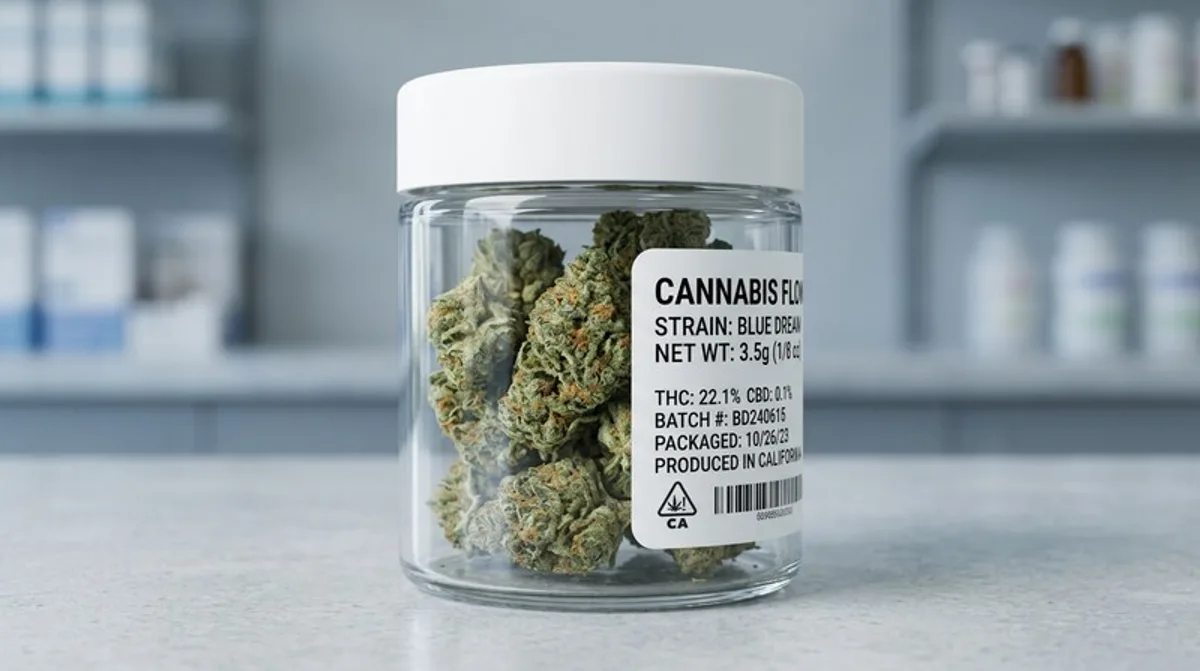
Cannabis quality: laboratory tests, pesticides & contamination
Home cannabis cultivation: rules according to CanG
Cannabis microdosing: low doses of THC & CBD




Leave a Reply
Want to join the discussion?Feel free to contribute!