Cannabis forms of consumption: Joint, vaporizer, oil & concentrates
- Vaporizer delivers 40-56 % bioavailability – more than twice as efficient as a joint
- Sublingual oil: onset of effect 15-45 min, no burn damage, can be dosed precisely
- Smoking: 25 % bioavailability + tar, benzenes and CO – pharmacologically the worst
Why the form of consumption fundamentally determines the effect
The same type of cannabis can have completely different effects depending on how it is consumed. Bioavailability, onset of effect, duration of effect and the risk profile differ considerably between joint, vaporizer, oil, edibles and concentrates. For medical users, the choice of consumption form is a pharmacological decision.
A comparison of forms of consumption
| Form of consumption | Bioavailability | Onset of action | Duration of effect | Risks |
|---|---|---|---|---|
| Joint (with tobacco) | 25-27 % | 1-5 min | 1-3 h | Tobacco nicotine, combustion, tar, CO |
| Joint (pure) | 25-27 % | 1-5 min | 1-3 h | Combustion, tar, CO – no nicotine |
| Vaporizer (flower) | 40-56 % | 1-3 min | 1-3 h | Minimal – no combustion smoke |
| Vaporizer (concentrate) | 50-70 % | 30-90 s | 1-2 h | Lipoid pneumonia with vitamin E acetate (e-cigarettes), minimal with pure extracts |
| Oil sublingual | 13-19 % | 15-45 min | 4-6 h | Minimal – no smoke, no combustion |
| Capsules/Edibles | 4-20 % | 30-120 min | 4-8 h | Unpredictability, 11-OH-THC formation |
| Topical (cream, gel) | <1 % systemic | 15-30 min (local) | 2-4 h (local) | Minimal – no systemic effect |
Vaporizer: The safest form of inhalation
Vaporizing heats cannabis to 170-230°C – below the combustion temperature (250°C+). As a result:
– No combustion products (no tar, no CO, no benzenes)
– Active ingredient yield 40-56 % (vs. 25 % with the joint)
– Reduced respiratory symptoms: Abrams et al. 2007 (Clin Pharmacol Ther): Significantly fewer respiratory symptoms after 1 month of vaporizer use than in joint users
Optimal temperatures:
– 170-185°C: Mainly CBD and linalool; light, clear effect
– 185-200°C: THC, myrcene; full effect
– 200-230°C: All cannabinoids and terpenes; strongest effect; slightly smoky flavor
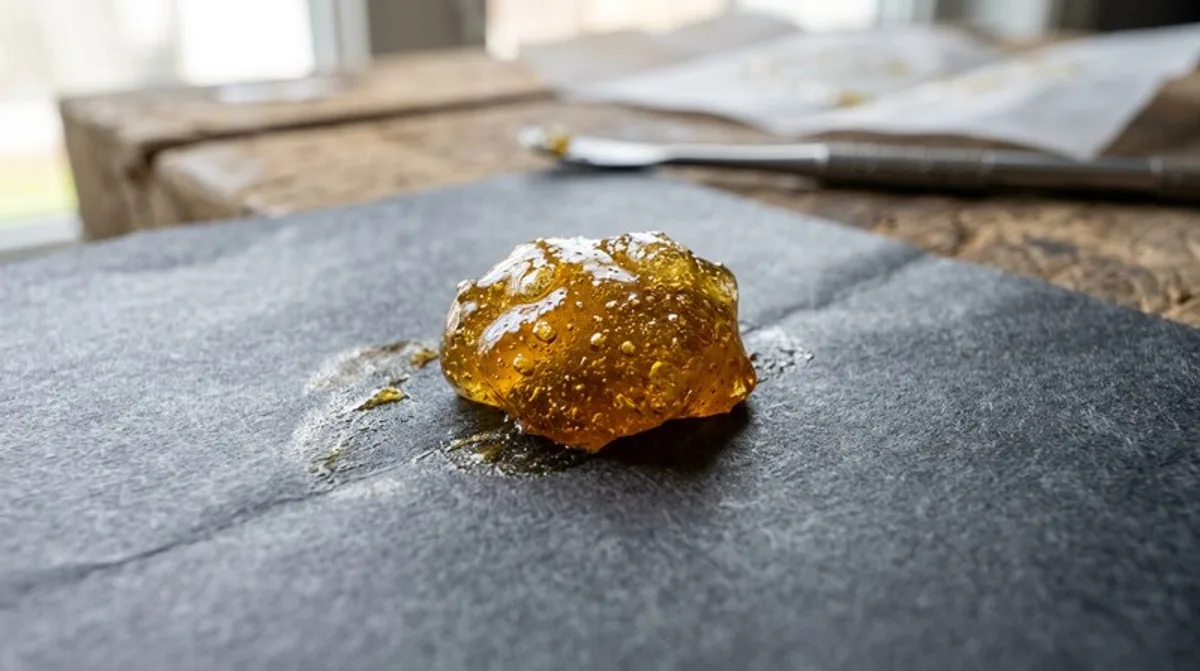
Concentrates: Hash, Rosin, Wax, Shatter
Traditional hashish: Compressed kief (trichomes); 15-40 % THC; oldest form of consumption. Not medically available in Germany.
Raisin (hot pressed): Solvent-free; full terpene retention; 50-70 % THC. Cleanest extraction.
BHO (butane extract) – Wax, Shatter: 60-90 % THC; solvent residues possible with poor quality. Only from certified manufacturers.
CO₂ extract: Medical standard; clean, defined concentration; basis for medicinal oil preparations.
Sublingual vs. oral: the difference in oils
Sublingual (under the tongue, hold for 60 sec.): Absorption directly via oral mucosa → bioavailability 13-19 %, onset of action 15-45 min. No first-pass effect.
Oral (swallow oil/capsule): First-pass effect in liver → THC → 11-OH-THC; lower but longer-lasting bioavailability; to be treated like edibles.
- Cannabis edibles: dosage & effect
Cannabis decarboxylation
FAQ: Cannabis forms of consumption
Summary
Form of consumption determines bioavailability (vaporizer 40-56 %, edibles 4-20 %), onset of effect (inhalation 1-5 min, oral 30-120 min) and risk profile (joint with tobacco = highest risk, vaporizer = lowest with inhalation). For medical use: vaporizer or sublingual oil are the preferred forms. Cannabis Edibles for the specifics of oral ingestion; vaporizer guide for in-depth temperature control.
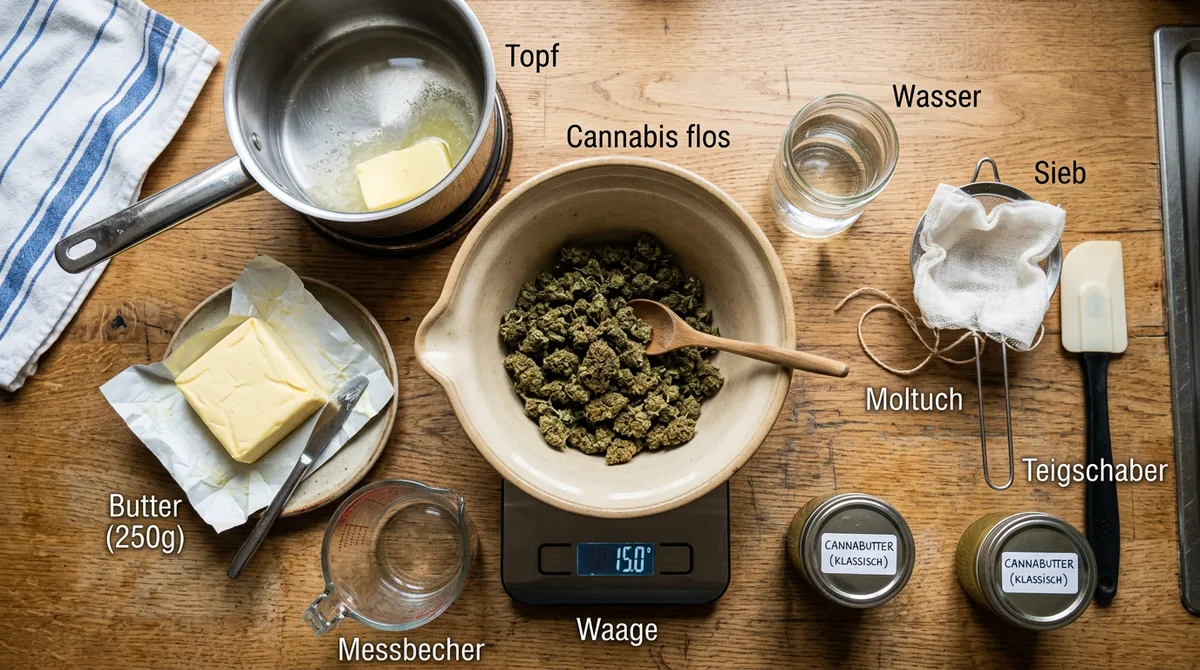
Infused Kitchen: Cannabis in butter, oil, honey & drinks
Cannabis for back pain: CBD, THC & intervertebral discs

Cannabis for social anxiety: CBD & social phobia
Cannabis for restless legs: CBD, dopamine & studies
Cannabis & bones: CB2, osteoporosis & bone healing
Cannabis & testosterone: effect on male fertility