Cannabis & testosterone: effect on male fertility
- Weekly consumption: 28% lower sperm concentration (Gundersen 2015, n=1215)
- All sperm effects completely reversible after 3 months of abstinence
- Women: Cannabis impairs egg maturation and luteal phase – no use if you want to have children
Cannabis and the male hormone system
Testosterone and male fertility are a relevant topic for cannabis users. The endocannabinoid system is directly integrated into the hypothalamic-pituitary-gonadal (HPG) axis, which regulates testosterone and sperm production. CB1 receptors are found in the hypothalamus, pituitary gland and testes.
Effects of THC on male hormones
| Parameters | Acute THC effect | Chronic THC effect | Recovery after abstinence |
|---|---|---|---|
| Testosterone (total) | Slight transient reduction | With high consumption: 10-30 % reduction | 4-8 weeks until normalization |
| LH (luteinizing hormone) | Pulsatile LH release dampened | Reduced LH amplitude | 4-6 weeks |
| Sperm count | No acute effect | Reduction with high consumption (50 % daily consumers) | 3-4 months (sperm maturation takes 74 days) |
| Sperm motility | No acute effect | Reduced with daily consumption | 3 months |
| Sperm morphology | No acute effect | Increased proportion of morphologically abnormal sperm | 3 months |
Study situation: cannabis and testosterone
Kolodny et al. 1974 (NEJM): First large study. Daily cannabis users had significantly lower testosterone levels than non-users. Study with methodological weaknesses; but fundamentally important.
Gundersen et al. 2015 (Am J Epidemiol): n=1215 young Danish men. Weekly cannabis use associated with 28% lower sperm concentration vs. non-users. Daily use + other drug use: up to 52 % reduction.
Hall et al. 2021 (Human Reprod): No statistically significant association between cannabis use and sperm parameters in younger cohort. Conflicting data confirmed.
Current consensus (2024): Moderate, occasional cannabis use probably has minimal effect on fertility. Daily use, especially >10 mg THC/day, is associated with hormonal and sperm changes. Effects are reversible with abstinence.
CB1 on sperm: Direct effect
Sperm cells express CB1 receptors. Anandamide directly modulates the acrosome reaction (necessary for oocyte penetration) and sperm motility:
– Low anandamide levels: stimulating for motility
– High anandamide/THC levels: inhibitory for motility
THC competes with anandamide for CB1 on sperm – direct inhibition of sperm function has been proven.
What does this mean in practical terms for the desire to have children?
If you actively wish to have children:
– Abstinence from cannabis containing THC at least 3 months before the planned attempt to conceive
– Sperm maturation takes 74 days – all sperm produced today will only be ready for ejaculation in 74 days
– CBD: no relevant negative effects on fertility proven
FAQ: Cannabis and testosterone
Summary
THC has negative effects on testosterone (up to -30 %) and sperm parameters with daily use via CB1 in the HPG axis and directly on sperm. Gundersen 2015 shows -28 % sperm concentration with weekly use. All effects reversible after 4-8 weeks (hormones) or 3 months (sperm). If you want to have children: 3 months abstinence. CBD has no relevant negative fertility effects. Tolerance break for abstinence tips; CBD vs. THC for the fundamental difference.

Cannabis for back pain: CBD, THC & intervertebral discs

Cannabis for social anxiety: CBD & social phobia

Cannabis for restless legs: CBD, dopamine & studies
Cannabis & bones: CB2, osteoporosis & bone healing
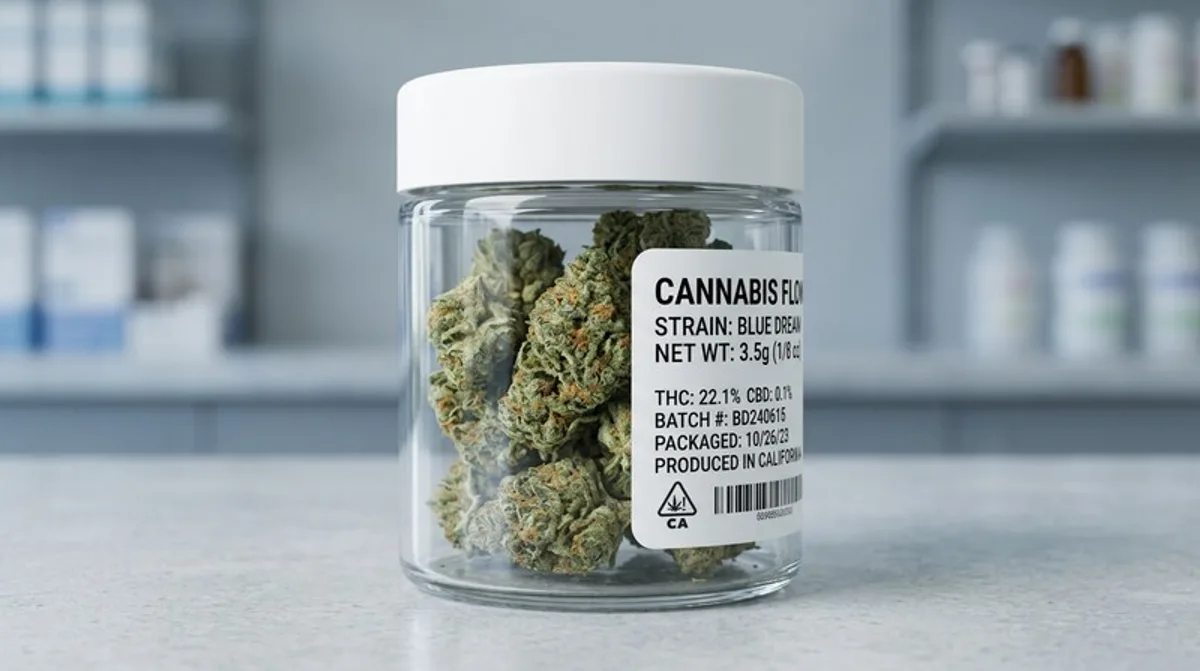
Cannabis quality: laboratory tests, pesticides & contamination
Home cannabis cultivation: rules according to CanG