Cannabis decarboxylation: activating THCA to THC
- Raw cannabis does not get you high – THCA hardly binds to CB1 receptors
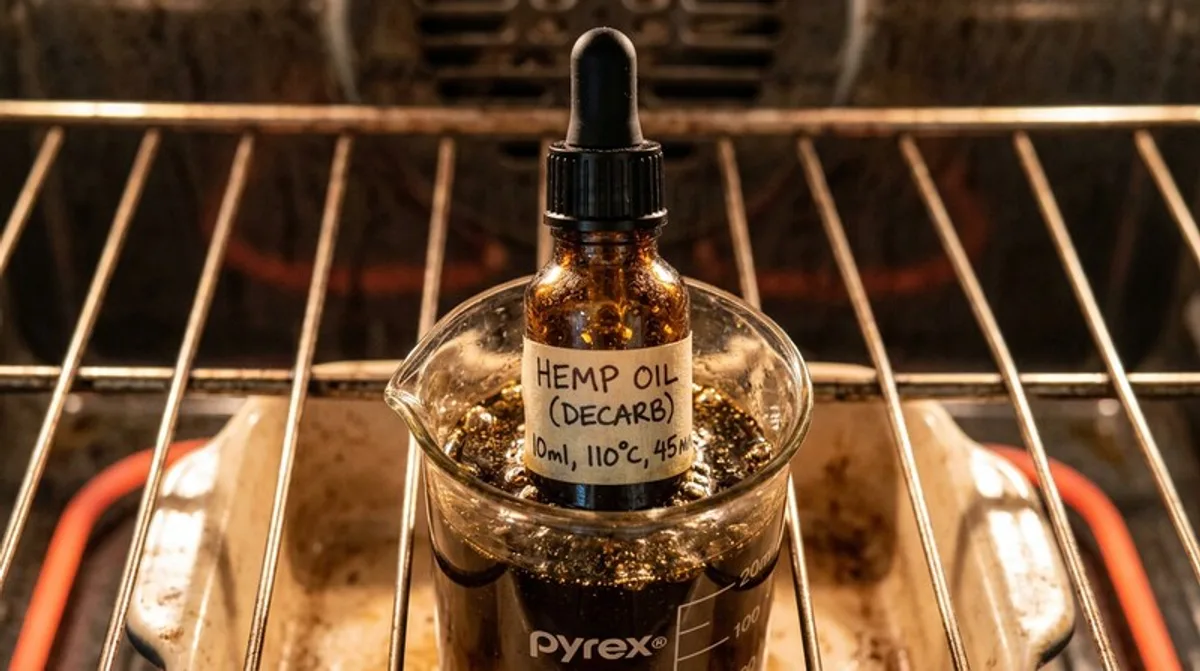
- Optimal decarboxylation: 120°C circulating air, 35-40 min – light brown = ready, dark brown = too long
- THC and CBD are fat-soluble – always infuse with butter, coconut oil or high-proof alcohol
What is decarboxylation and why is it necessary?
Fresh cannabis flowers contain hardly any THC – instead its precursor THCA (tetrahydrocannabinolic acid). THCA is not psychoactive and hardly binds to CB1 receptors. Only through heat (decarboxylation) is the carboxyl group split off and the active THC released. If you want to use cannabis for edibles, oils or capsules, you must first decarboxylate it.
The chemical reaction: THCA → THC + CO₂ (carboxyl group is split off as carbon dioxide)
The same applies to CBDA → CBD.
Decarboxylation temperatures and time course
| Temperature | Time | THC yield | Terpene retention | Remark |
|---|---|---|---|---|
| 105°C | 60 min | 70-80 % | High | Gentle, slow; for taste awareness |
| 120°C | 40 min | 85-90 % | Medium | Standard recommendation for oven |
| 140°C | 20-25 min | 90-95 % | Low | Faster; terpene degradation significant |
| 160°C+ | 10-15 min | Decrease! | Very low | THC starts to burn; not recommended |
| Room temperature | Months | Very slow | Completely | Natural aging; CBD-dominant products |
Practical decarboxylation in the oven
Step by step:
1. coarsely crush cannabis (do not grind too finely – fine grinding before decarb leads to terpene degradation)
2. place baking paper on baking tray, spread cannabis evenly
3. preheat the oven to 120°C fan oven
4. Bake for 35-40 minutes
5. cannabis looks light brown-beige when ready – darker = too long
6. allow to cool, then grind finely for further processing
Odor note: Decarboxylation has an intense odor. Ventilate well or seal oven with baking paper to reduce odor.
Infusion: butter, oil, alcohol
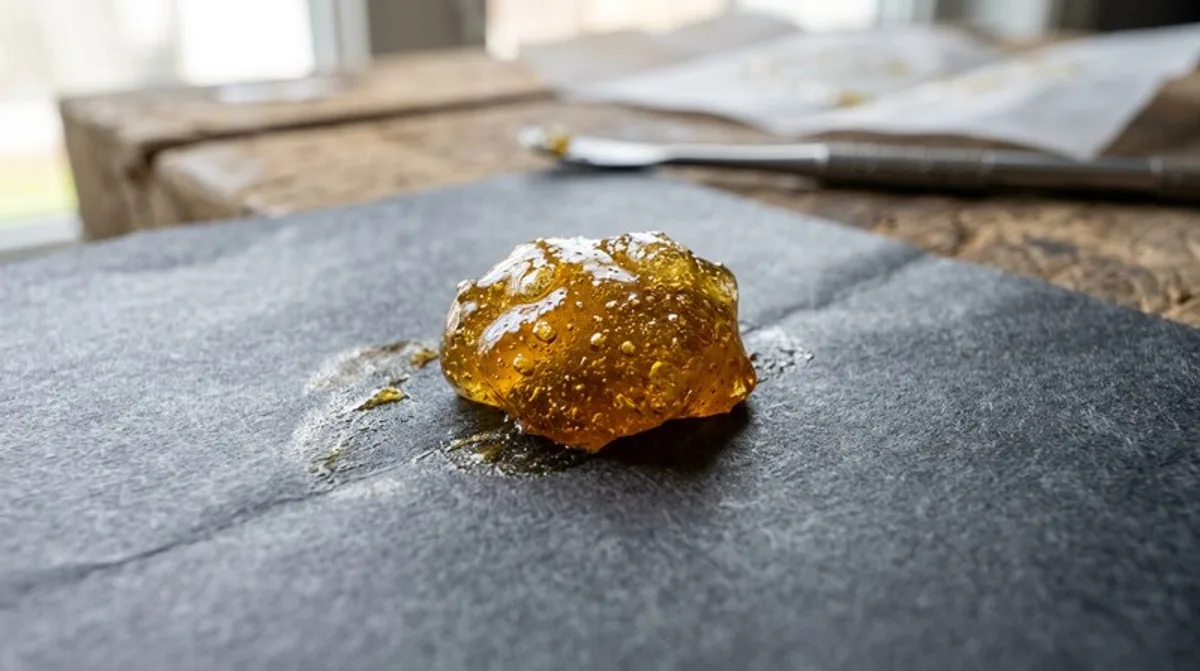
After decarboxylation, activated THC is infused into a fat solvent (THC is lipophilic):
Cannabutter: 1g decarboxylated cannabis + 100g butter at 60-70°C, stir for 2-3 hours. Strain. THC content: ~50-60% of the THCA content of the flower (losses through process).
Cannabis oil (coconut or olive oil): Same method. Coconut oil has a higher saturated fat content = better THC solution.
Alcohol tincture: Shake high-proof alcohol (90%+) with decarboxylated cannabis for 30 minutes. Strain. Quick method; can be used sublingually.
THCA raw: Does it have advantages?
Interesting: THCA itself is not pharmacologically worthless – it shows:
– Anti-inflammatory effect (PPAR-γ agonism)
– Antiemetic effect in animal models
– Neuroprotective properties (PPARγ)
Raw cannabis juice (cold-press) or THCA crystals are therefore a separate therapeutic form of application without a psychoactive effect.
FAQ: Cannabis decarboxylation
Summary
Decarboxylation converts inactive THCA into active THC through heat (120°C, 35 min) – necessary for edibles, oils and capsules. Optimum: 120°C circulating air for maximum yield with terpene preservation. Then infuse in butter, coconut oil or alcohol. THCA itself has non-psychoactive therapeutic properties. Edibles guide for pharmacokinetics and dosage; consumption form comparison for all ingestion options.
Cannabis for back pain: CBD, THC & intervertebral discs

Cannabis for social anxiety: CBD & social phobia
Cannabis for restless legs: CBD, dopamine & studies
Cannabis & bones: CB2, osteoporosis & bone healing
Cannabis & testosterone: effect on male fertility
Cannabis quality: laboratory tests, pesticides & contamination