Cannabis for endometriosis: pain, CBD & study situation
- Endometriosis lesions express CB1 and CB2 – ECS directly involved in pathophysiology
- CBD inhibited proliferation and invasion of endometriosis lesions in vitro (Bouaziz 2017)
- 13% of endometriosis patients use cannabis – average 7.6/10 self-reported efficacy
Endometriosis and the endocannabinoid system
Endometriosis affects around 10 % of all women of childbearing age – around 2 million sufferers in Germany. The disease is characterized by ectopic endometrial tissue (outside the uterus), which bleeds monthly, causes inflammation and triggers chronic pelvic pain. The link to the endocannabinoid system (ECS) is well documented – making cannabis one of the most pharmacologically plausible options for this condition.
ECS in endometriosis: key findings
CB1 and CB2 expression in endometriosis tissue: Endometriosis lesions express CB1 and CB2 – interestingly at lower levels than normal endometrium. This ECS hypoactivity in endometriosis tissue could explain why exogenous cannabinoids have a therapeutic effect (compensation of the deficit).
Anandamide and endometriosis: Obstetric women with endometriosis have lowered anandamide levels in the peritoneal fluid. Anandamide normally inhibits endometrial cell migration – if there is a deficiency, the tissue can colonize more easily outside the uterus.
TRPV1 and pelvic pain: TRPV1 is highly overexpressed in nerve fibers that innervate endometriosis lesions. CBD desensitization of TRPV1 = direct pain relief at the origin of pain.
Study situation: Cannabis for endometriosis
| Study | Design | Result |
|---|---|---|
| Armour et al. 2019 (J Obstet Gynaecol Can) | Survey, n=484 endometriosis patients Australia, cannabis use | Cannabis in top 3 most effective pain therapies; 56% reported strong pain reduction; higher effectiveness than many standard therapies |
| Sinclair et al. 2020 (J Altern Complement Med) | Online survey, n=252, cannabis use for endometriosis | 61% used cannabis for pain management; 96% reported symptom improvement; dysmenorrhea and dyspareunia most improved |
| Escudero-Lara et al. 2021 (eLife) | Mouse model, endometriosis + CBD | CBD reduces endometriosis lesion size, decreases pain sensitivity and proinflammatory markers; CB2 and PPAR-γ as mechanisms |
What cannabis can help with endometriosis
Dysmenorrhea (menstrual pain): CB1 activation in the uterus inhibits prostaglandin-mediated contractions – strongest type of pain in endometriosis. THC and CBD act synergistically: THC via CB1 analgesia, CBD via TRPV1 desensitization and inhibition of inflammation.
Dyspareunia (pain during sex): Deep infiltrative endometriosis (DIE) causes severe sexual pain. Cannabis locally (CBD suppositories, lubricants) and systemically shows strong improvement in surveys. Armour 2019: Dyspareunia as one of the most improved symptoms.
Intestinal endometriosis: Intestinal endometriosis causes flatulence, cramps and diarrhea. Cannabis (CB1 in the intestine) can normalize intestinal motility and reduce pain.
Chronic pelvic pain: central sensitization in long-term endometriosis. Cannabis attenuates central sensitization via CB1 in the dorsal horn + CBD via NMDA modulation.


Practical application: What works
Systemic (for persistent pain):
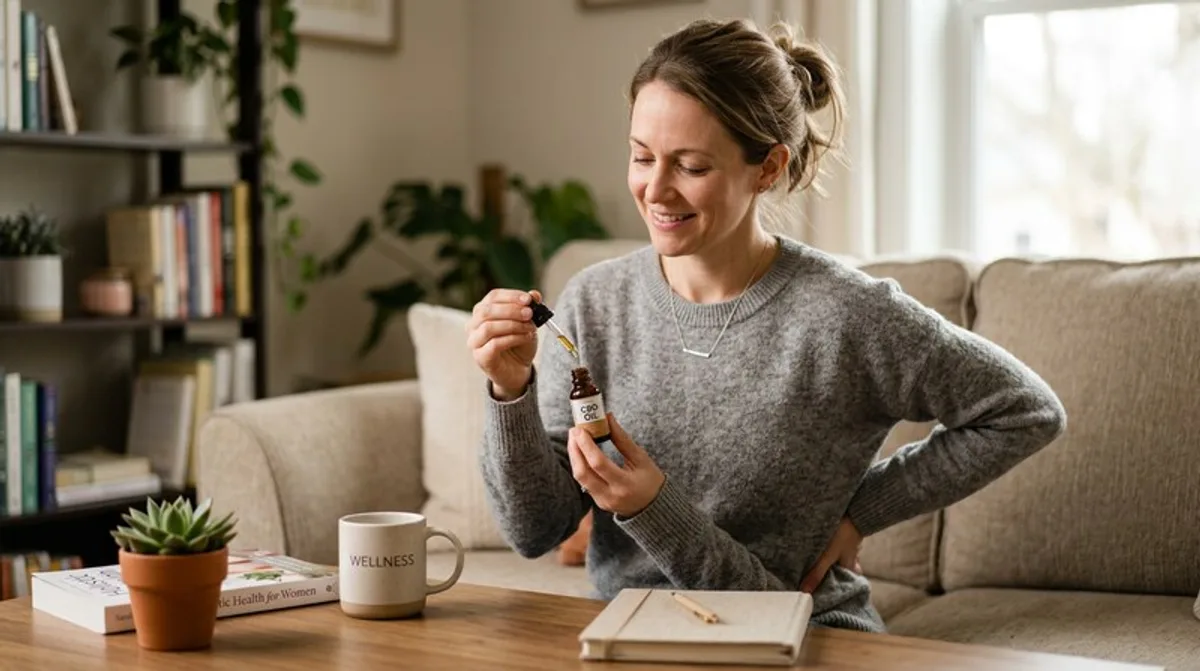
– CBD 50-150 mg daily continuously (anti-inflammatory, TRPV1)
– THC 2.5-10 mg in the evening (sleep + pain peaks)
– Cannabis on prescription: indication pelvic chronic pain
Local (for sexual pain):
– CBD suppositories (100-200 mg CBD vaginally or rectally) 30 minutes before sex
– CBD lubricant for external relief
– TRPV1 desensitization locally in the affected tissue
GKV and endometriosis
Endometriosis alone is not an explicitly listed cannabis indication. Access is via:
– Chronic pelvic pain (as an indication of pain)
– Therapy resistance after hormones (gestagens, GnRH analogs) and NSAIDs
– Documented suffering and loss of quality of life
Gynecologists who specialize in pain medicine or pain clinics are the best place to go.
Cannabis for PMS - Cannabis during the menopause
FAQ: Cannabis for endometriosis
Summary
Endometriosis and ECS are closely linked: CB1/CB2 in endometriosis tissue, anandamide deficiency as key mechanism, TRPV1 overexpression in endometriosis nerve fibers. Patient studies show cannabis in the top 3 most effective endometriosis pain therapies. CBD suppositories locally, systemic THC/CBD for persistent pain and sleep. Cannabis and sexual pain and cannabis for chronic pain for related topics.
Cannabis for Crohn's disease: CBD, remission & studies

Cannabis for restless legs: CBD, dopamine & studies
Cannabis & bones: CB2, osteoporosis & bone healing
Cannabis & testosterone: effect on male fertility
Cannabis quality: laboratory tests, pesticides & contamination
Home cannabis cultivation: rules according to CanG