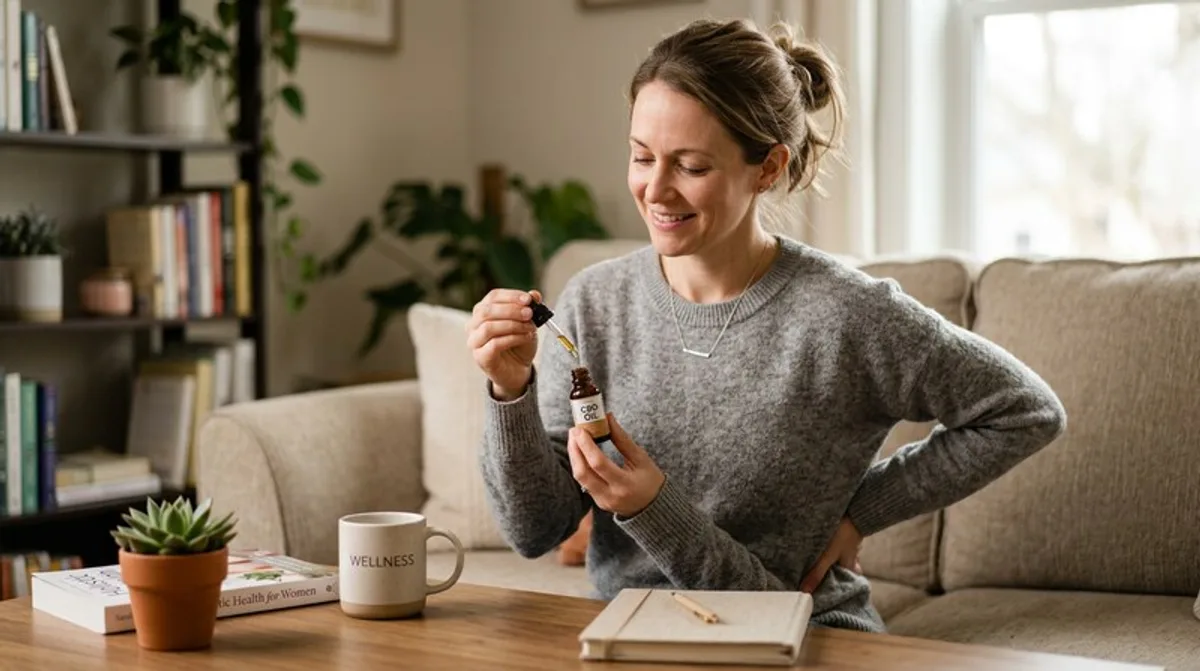
Cannabis for PMS & menstrual pain
- CBD inhibits COX-2 – the same mechanism as ibuprofen, but without gastrointestinal risk
- 52% of women with dysmenorrhea already use cannabis for pain relief (Armour 2019)
- Topical directly on abdomen and back: local CB2 effect without systemic psychoactivity
PMS, dysmenorrhea and the endocannabinoid system
Premenstrual syndrome (PMS) and primary dysmenorrhea (menstrual pain) affect up to 90 % of all women of reproductive age. The endocannabinoid system (ECS) is directly involved in menstruation: CB1 receptors are found in uterine muscles, fallopian tubes and the limbic system. Anandamide levels fluctuate depending on the menstrual cycle – they drop premenstrually, which helps explain PMS symptoms.
Prostaglandin connection: Dysmenorrhea is mainly caused by prostaglandin-E2 and -F2α, which trigger uterine contractions and ischemia. CBD inhibits COX-2 (the enzyme that produces prostaglandins) via the same mechanism as ibuprofen – but without the gastrointestinal damage.
Mechanisms of action of cannabis for menstrual pain
| Mechanism | Substance | Effect |
|---|---|---|
| CB1 in uterine muscles | THC | Muscle relaxation, reduction of uterine contractions |
| COX-2 inhibition | CBD | Less prostaglandin E2/F2α → fewer cramps |
| TRPV1 desensitization | CBD | Reduced pain sensitivity in pelvic nerves |
| 5-HT1A agonism | CBD + limonene | Anxiolytic, antidepressant → PMS mood stabilized |
| GABA-A modulation | CBD + linalool | Anxiety, irritability, sleep disorders before the period |
Study situation: Cannabis for menstrual pain
Specific clinical RCTs on cannabis and dysmenorrhea are still lacking. Available evidence comes from surveys and mechanistic studies:
Armour et al. 2019 (J Obstet Gynaecol): Survey, n=484 women with dysmenorrhea. 52% used cannabis for pain relief. Evaluated efficacy: 7.6/10. Most common methods: smoking (62%), CBD oil (46%), edibles (31%).
Mechoulam & Parker 2013 (Review, Annu Rev Psychol): Anandamide modulates pain tolerance and mood in a cycle-dependent manner. Estrogen stimulates anandamide synthesis → premenstrual anandamide dip explains PMS exacerbation.
Silvestro et al. 2019 (Molecules): CBD reduces COX-2 expression and prostaglandin production in endometrial cells in vitro. Mechanistic evidence for anti-dysmenorrheal effect.
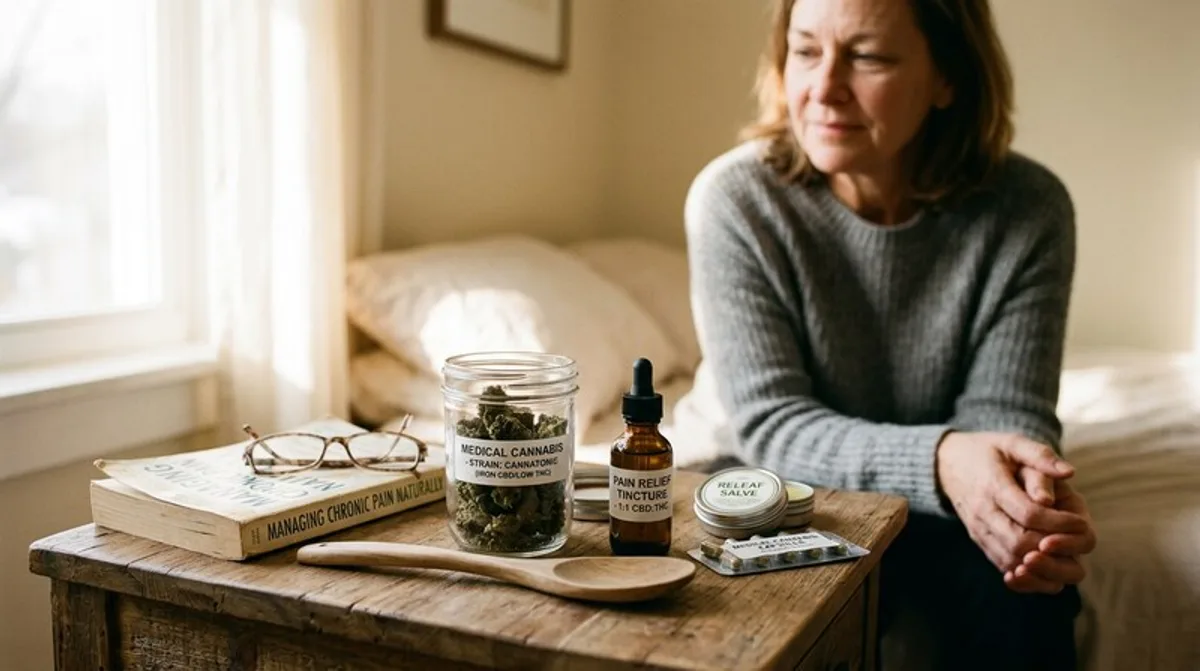

CBD topical vs. systemic for menstrual pain
Topical (heat patch, gel): CBD suppositories or abdominal massage oil – local CB1 activation in uterus and pelvic nerves, minimal systemic effect, no high.
Systemic (sublingual oil): CBD 50-100 mg from 2 days before the start of the period – preventive COX-2 inhibition and ECS stabilization. Onset of action 30-60 minutes after ingestion.
THC for severe cramps: Low doses of THC (2.5-5 mg) have a strong muscle relaxant effect. Prescribed by gynecologists for dysmenorrhea in countries with medical cannabis (Canada, Netherlands).
PMS symptoms in detail: What helps
Pain/cramps: CBD 50-100 mg + low THC; linalool/beta-caryophyllene-rich strain
Mood swings/anxiety: CBD 30-60 mg, limonene-rich
Sleep disorders (premenstrual): CBD 150 mg + 2.5 mg THC in the evening
Breast tenderness: CBD topical (local anti-inflammatory)
Flatulence/intestinal cramps: CBD – CB1 in the intestinal wall relaxes smooth muscles
- Cannabis during the menopause
Comparison of forms of consumption
FAQ: Cannabis for PMS and menstrual pain
Summary
Cannabis – especially CBD – intervenes pharmacologically directly in the causes of PMS and dysmenorrhoea: COX-2 inhibition, CB1 in uterine muscles, TRPV1 desensitization, 5-HT1A for mood. Survey data show high patient satisfaction. Clinical RCTs are lacking. CBD 50-100 mg preventively from the start of the period, topically for local effect, low THC doses for severe cramps. Cannabis in menopause for related hormonal issues; CBD dosing guide for precise intake strategies.
Cannabis for restless legs: CBD, dopamine & studies
Cannabis & bones: CB2, osteoporosis & bone healing
Cannabis & testosterone: effect on male fertility
Cannabis quality: laboratory tests, pesticides & contamination
Home cannabis cultivation: rules according to CanG
Cannabis microdosing: low doses of THC & CBD