Cannabis for bipolar disorder: risks, CBD & studies
- THC in bipolar disorder = risk factor for mania triggers – no attempt to self-medicate with THC
- 40% of bipolar patients use cannabis – mostly self-medication for depressive phases
- CBD shows first mood stabilizer signals, but no clinical RCTs available
Bipolar disorder and the endocannabinoid system
Bipolar disorder (formerly: manic-depressive illness) affects around 2.5 million people in Germany. The endocannabinoid system (ECS) modulates mood, sleep and impulsivity – all areas that are dysregulated in bipolar disorder. However, the relationship between cannabis and bipolar disorder is highly complex and double-edged.
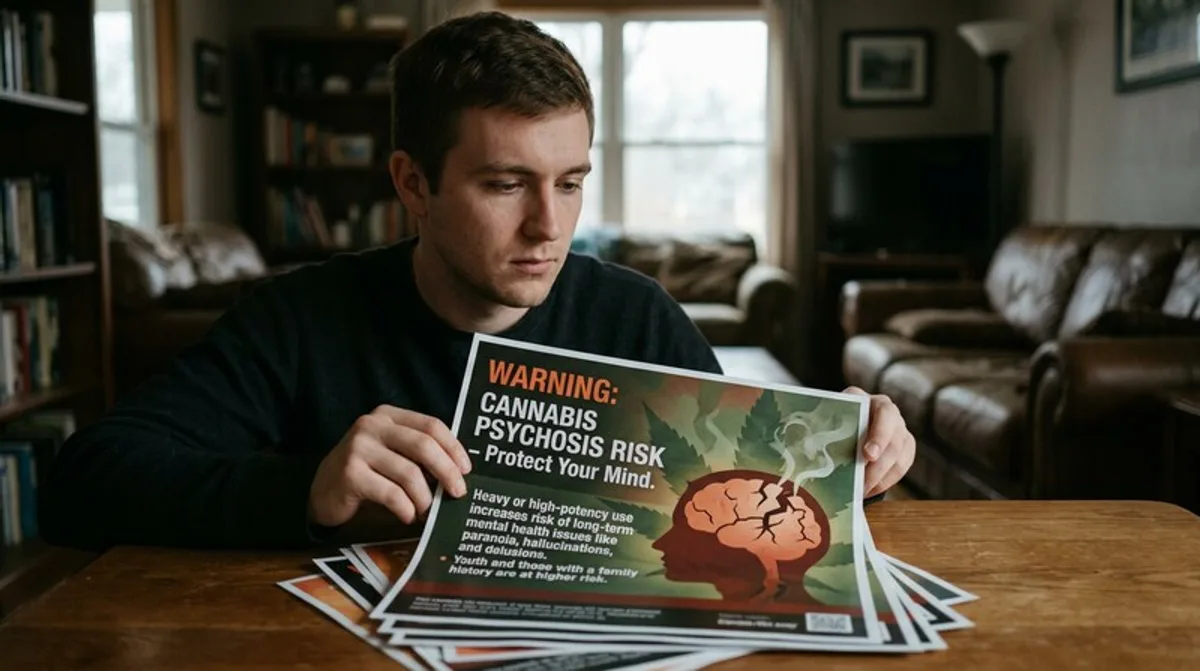
Studies show that cannabis is often used by those affected as self-medication – especially in depressive phases. At the same time, THC is a recognized risk factor for triggering mania, inducing psychosis and worsening the long-term course of the disease.
Clinical study situation: findings and limitations
| Study | Design | Result |
|---|---|---|
| Strakowski et al. 2000 (Am J Psychiatry) | Longitudinal, n=144 bipolars, SUD comorbidities | Cannabis abuse doubles mania relapse rate; shortens time to next manic episode |
| Henquet et al. 2006 (J Clin Psychiatry) | Longitudinal study, n=4045, general population | Cannabis use increases mania symptoms in bipolar predisposition; dose-dependent |
| Ashton et al. 2005 (Bipolar Disord) | Review, cannabis + mood stabilizers | THC destabilizes mood; CBD, in contrast, shows antipsychotic and anxiolytic properties |
| Bahorik et al. 2017 (J Affect Disord) | Cohort study, n=2785 bipolar patients | Cannabis use associated with poorer treatment outcome, higher hospitalization rate |
THC: The mania trigger
THC is the critical drug in bipolar disorder. The mechanisms are well understood:
Dopamine dysregulation: THC acutely increases mesolimbic dopamine release – the same mechanism that drives mania symptoms. In bipolar patients who are genetically predisposed to dopamine overactivity, THC can undercut the hypomanic threshold.
Sleep disruption: Manic episodes are triggered by sleep deprivation. THC suppresses deep sleep and REM, fragments the sleep architecture – a direct risk factor for mania in bipolar patients.
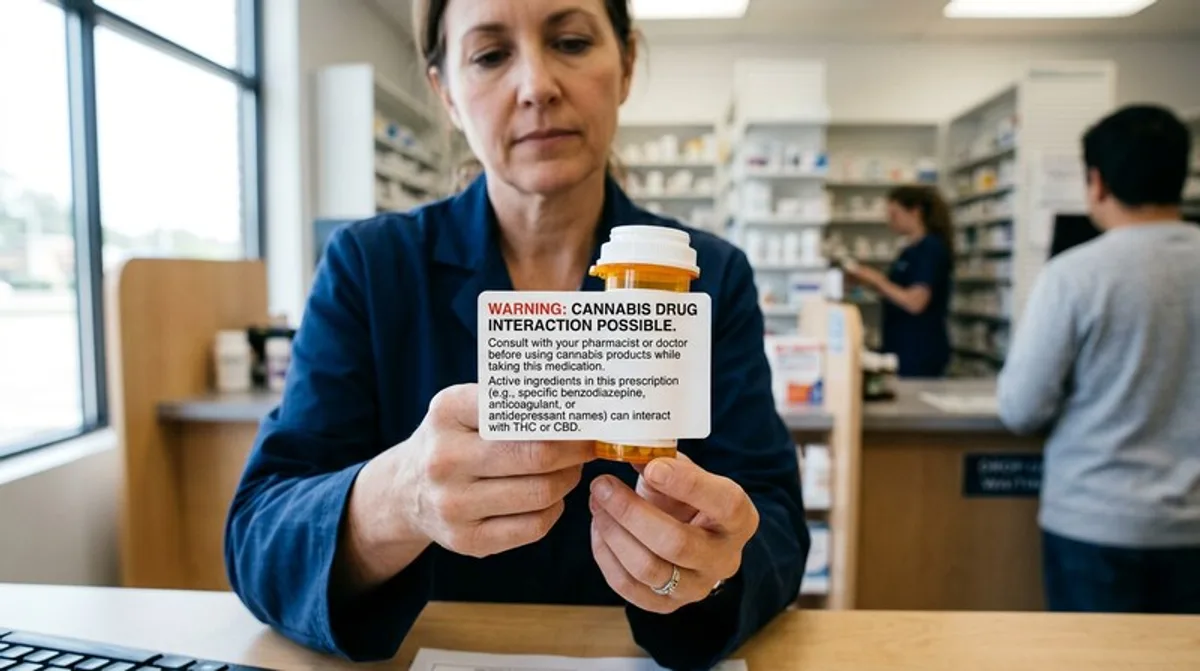
Mood stabilizer interaction: Lithium, valproate and lamotrigine are CYP substrates. CBD and THC influence CYP3A4 and CYP2D6 – changes in levels can lead to under- or oversupply and destabilize the therapeutic range.
CBD: potential opportunities, clear limits
In contrast to THC, CBD has a more favorable profile:
Antidepressant effect: FAAH inhibition → anandamide increase → CB1 in the limbic system; 5-HT1A agonism. Relevant for depressive phases of bipolar disorder.
Antipsychotic properties: CBD modulates dopamine signaling without direct D2 antagonization (like classic antipsychotics) – which avoids the risk of tardive dyskinesia. In individual case studies and small case series (McGuire 2018, JAMA Psychiatry), CBD showed antipsychotic effects comparable to amisulpride in schizophrenia patients.
Sleep: CBD in higher doses (150-300 mg) promotes deep sleep without REM suppression – more favorable profile than THC for mania prophylaxis.
But: There are no RCTs on CBD specifically for bipolar disorder. The evidence is based on mechanism considerations and small case series. CBD is not recommended as first-line treatment for bipolar disorder.


Who is particularly at risk?
High-risk patients for THC in bipolar disorder:
– Bipolar I with pronounced mania (higher baseline dopamine level)
– Earlier age of onset (<25 years) – correlation with poorer cannabis abuse outcome
– Family history of schizophrenia (CNR1 polymorphism carriers)
– Current mania or hypomania (absolute contraindication)
– Unstable medication levels (lithium monitoring)
Practical recommendations
Cannabis and bipolar disorder: general caution. Use should be discussed with the treating psychiatrist.
If cannabis is used: CBD-dominant preparations (lowest risk), no high-percentage THC, no use in manic/hypomanic phases, regular mood monitoring (QIDS-SR).
Medical cannabis: Possible in principle for bipolar depression with treatment resistance, but off-label and only under close psychiatric supervision. Interactions with mood stabilizers must be monitored regularly.
Cannabis addiction & withdrawal - Cannabis for social anxiety
FAQ: Cannabis for bipolar disorder
Summary
Cannabis in bipolar disorder is a high-risk issue: THC can trigger mania and worsen the long-term course. Although CBD shows antidepressant and antipsychotic properties, there is a lack of RCT evidence specifically for bipolar disorder. Use only under psychiatric supervision, CBD-dominant, no THC in manic phases, consider the risk of psychosis. Depressive phases tend to respond better than manic phases – caution nevertheless.
Cannabis for Crohn's disease: CBD, remission & studies

Cannabis for restless legs: CBD, dopamine & studies
Cannabis & bones: CB2, osteoporosis & bone healing
Cannabis & testosterone: effect on male fertility
Cannabis quality: laboratory tests, pesticides & contamination
Home cannabis cultivation: rules according to CanG