Organizing your wardrobe: Step by step to perfect order
An organized wardrobe is not a luxury – it is an investment of time that pays off every day. Whoever knows where everything is saves valuable minutes in the morning, makes better outfit decisions, and starts the day with a clearer mind. Good organization does not begin with expensive built-in systems or elaborate renovations, but with the right principle – and an honest look at what is actually in the closet. Whoever wants to reduce the number of clothing items at the same time should first familiarize themselves with the concept of Capsule Wardrobe. And whoever wants to actively let go will find the ideal entry point in the
Why an organized wardrobe changes life
It sounds exaggerated – but it’s not. Studies on decision fatigue show that people spend up to 30 minutes a day choosing their outfit if their wardrobe is unstructured. A tidy wardrobe reduces this time to under five minutes. The wardrobe is the first contact with the day – chaos there immediately affects your mood. At the same time, overcrowded wardrobes are a common reason for unnecessary fashion purchases: you don’t see what you already have, and end up buying duplicates or items you already own.
Another underestimated effect: whoever knows their wardrobe dresses better. Not because more money is spent, but because the existing pieces are combined more consciously. Order in the wardrobe is literally style.
Step 1: Declutter before organizing – always
An organizational system is useless if the content is wrong. Therefore: first declutter, then organize. Take out all clothing – completely. Spread them out on the bed, on the floor, on chairs. Then form two piles: keep and give away. The most important rule here: Anything not worn in the last 12 months has to go. No exceptions, no “maybe someday” piles.
- Seasonal exception: Ski suit and evening dress naturally have less frequent use – here 24 months is a guideline
- Emotional check: Hesitation when looking at a piece is a clear signal. Anyone who still doesn’t know after three seconds whether they want to keep a piece doesn’t want to keep it.
- Fitting check: Items that no longer fit and for which you “have to lose weight” will remain in the closet permanently in 90 percent of cases – better to give them away
How to systematically and emotionally approach decluttering is explained in detail in the
Step 2: Divide into categories and zones
After decluttering comes zoning – the heart of every good wardrobe organization. The principle: What is used most frequently must be the easiest to reach.
| Zone | Height | What belongs here |
|---|---|---|
| Zone 1 | Eye level | Daily used basics, favorite shirts, most worn pants |
| Zone 2 | Above eye level | Seasonal items, festive clothing, vacation clothes, spare blankets |
| Zone 3 | Below (floor) | Shoes, heavy bags, sportswear in storage boxes |
| Zone 4 | Doors and sides | Scarves, belts, jewelry, accessories on hooks or bag organizers |
Within the zones applies: Clearly separate categories. All jeans together, all blouses together, all sweaters together. Those who sort by color (light to dark) find pieces even faster and can see at a glance whether a particular shade is already present.
Step 3: Maximize storage space
Most wardrobes are used much worse than they could be. With simple measures, the available space can be almost doubled:
- Hanging vs. Folding: Structured pieces hang – blazers, coats, shirts, dresses, delicate blouses. Everything else is folded and stacked: T-shirts, jeans, knits, sportswear, pajamas.
- Drawer organizers: Dividers for socks, underwear, and accessories. Without dividers, you search through drawer chaos – with dividers, you reach directly for the right compartment.
- Double clothes rod: Mount a second rod underneath for short tops and jackets – doubles the hanging space without renovation
- Door Organizer: Equip doors and back panels with hooks, pockets or organizer panels for scarves, belts, handbags and jewelry
- Seasonal Rotation: Swap out summer and winter clothing. Vacuum bags compress winter jackets and blankets to one fifth of their volume.
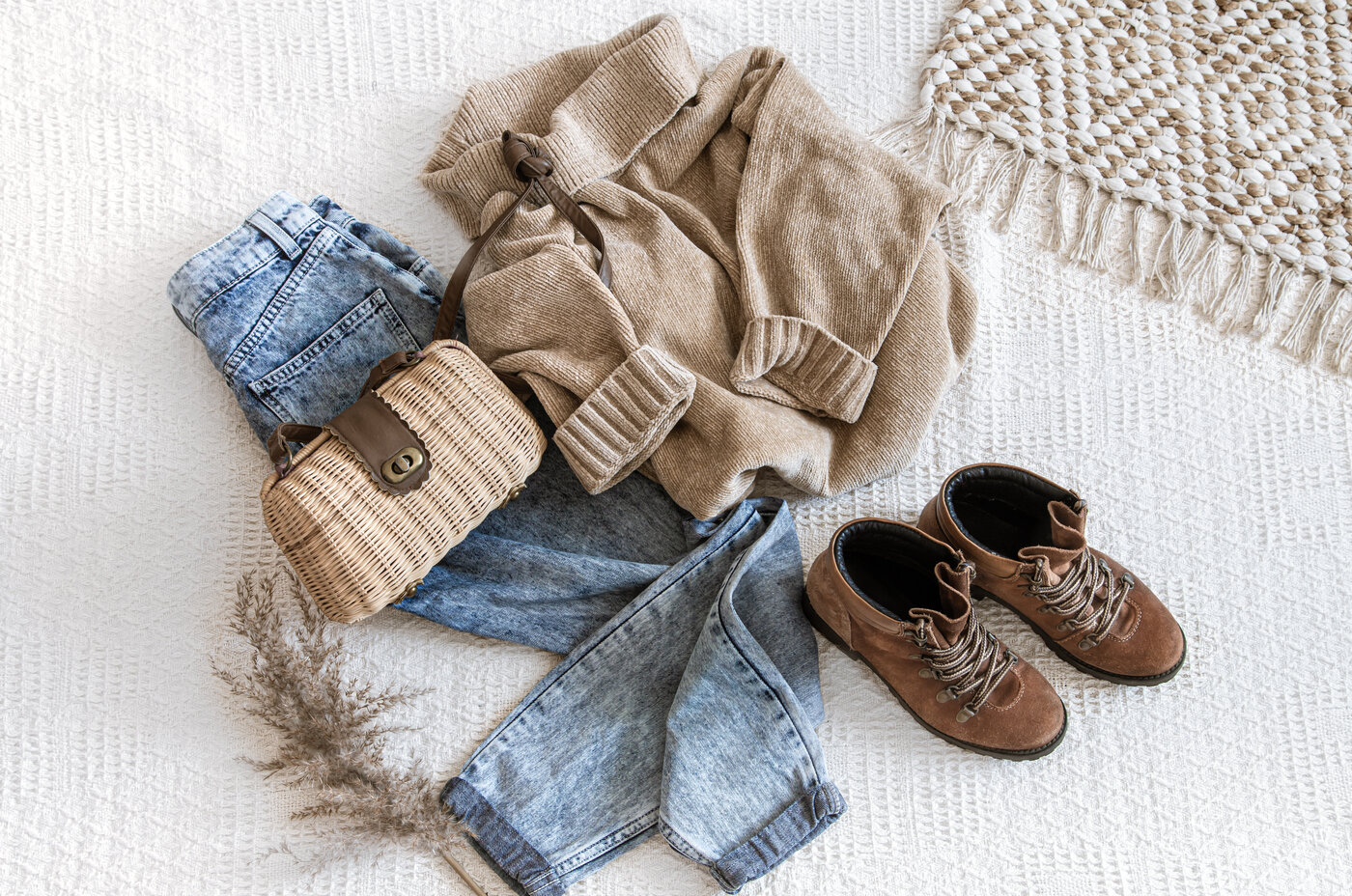
Folding Clothes Properly: The Three Most Important Techniques
How clothes are folded determines space, visibility and wrinkle-free results. Three methods dominate:
| Method | Ideal for | Advantage |
|---|---|---|
| KonMari | T-shirts, pants, knits | Standing upright, everything visible at a glance |
| Ranger Roll | T-shirts, socks, underwear | Extremely compact, no wrinkles when taking out |
| Third Fold | Pants, jeans | Saves more space than stacking, easy to grab |
Whoever has once tried the KonMari method for T-shirts and pants rarely returns to the classic stacking technique: You can see all the colors at the same time, removing one piece doesn’t disturb the rest, and drawers remain tidy even after weeks of use.
Overview of the best organization helpers
| Produkt | Einsatz | Preis ca. |
|---|---|---|
| IKEA Skubb Organizer | Socks, underwear, accessories | 5–10 Euro |
| Silk hangers | All hanging pieces – non-slip, thin | 15–25 euro for 50 pieces |
| Klarsicht-Schuhboxen | Schuhe sichtbar aufbewahren | 2–4 € per piece |
| Vacuum bags | Seasonal clothing, blankets | 10–20 Euro pro Set |
| Door organizer with compartments | Scarves, belts, bags | 8–18 Euro |
Common Mistakes When Organizing Your Wardrobe
- Organizing without decluttering first: The most common misunderstanding. A system for too many items will never work in the long run.
- Too many categories: Whoever creates 15 subcategories for drawers won’t maintain them after two weeks. Three to five main categories are sufficient.
- Pinterest perfectionism: Stacked pastel-colored towels look nice – but a system must above all work, not be photogenic.
- One-time action without routine: Organization is not a project, but a habit. Ten minutes per week keep the state intact.
FAQ: Organizing Your Wardrobe
- Wie oft sollte ich meinen Kleiderschrank reorganisieren?
- Eine vollständige Reorganisation zweimal im Jahr – beim Saison-Wechsel im Frühjahr und Herbst – reicht aus. Wer eine gute Grundstruktur etabliert hat, braucht dazwischen nur minimale Pflege (ca. 10 Minuten pro Woche).
- Was ist die KonMari-Methode und funktioniert sie wirklich?
- Die KonMari-Methode von Marie Kondo basiert auf der Frage „Löst es bei mir Freude aus?” und der vertikalen Falttechnik. Sie funktioniert besonders gut für Schubladen und erzwingt beim Ausmisten ehrlichere Entscheidungen als das bloße Anschauen im Schrank.
- Wie gehe ich mit kleinen Kleiderschränken um?
- Kleine Schränke profitieren am stärksten von vertikalem Denken: Doppelte Kleiderstangen für kurze Stücke, Türorganizer, Vakuumsäcke für Saisonales. Vor allem gilt: Weniger Kleidung ist entscheidend. Ein kleiner Schrank zwingt zu einer ehrlicheren Garderobe.
- Sollte ich nach Farbe oder nach Kategorie sortieren?
- Erst nach Kategorie (alle Jeans, alle Shirts, alle Jacken), dann innerhalb der Kategorie nach Farbe (hell zu dunkel). So findet man sowohl die Kleidungsart als auch den gewünschten Farbton schnell.
- Was tue ich mit Kleidung, von der ich mich nicht trennen kann?
- Einen Probier-Box-Trick anwenden: Stücke, bei denen man unsicher ist, in eine Box packen und sechs Monate lagern. Wenn man in dieser Zeit nicht danach sucht, wird die Box ungeöffnet abgegeben. Das reduziert die emotionale Last der Entscheidung erheblich.
{
“@context”: “https://schema.org”,
“@type”: “FAQPage”,
“mainEntity”: [
{
“@type”: “Question”,
“name”: “Wie oft sollte ich meinen Kleiderschrank reorganisieren?”,
“acceptedAnswer”: {
“@type”: “Answer”,
“text”: “Eine vollständige Reorganisation zweimal im Jahr reicht aus. Wer eine gute Grundstruktur etabliert hat, braucht dazwischen nur minimale Pflege.”
}
},
{
“@type”: “Question”,
“name”: “Was ist die KonMari-Methode und funktioniert sie wirklich?”,
“acceptedAnswer”: {
“@type”: “Answer”,
“text”: “Die KonMari-Methode von Marie Kondo basiert auf der Frage Löst es bei mir Freude aus? und der vertikalen Falttechnik. Sie funktioniert besonders gut für Schubladen.”
}
},
{
“@type”: “Question”,
“name”: “Wie gehe ich mit kleinen Kleiderschränken um?”,
“acceptedAnswer”: {
“@type”: “Answer”,
“text”: “Kleine Schränke profitieren am stärksten von vertikalem Denken: Doppelte Kleiderstangen, Türorganizer, Vakuumsäcke für Saisonales. Weniger Kleidung ist entscheidend.”
}
},
{
“@type”: “Question”,
“name”: “Sollte ich nach Farbe oder nach Kategorie sortieren?”,
“acceptedAnswer”: {
“@type”: “Answer”,
“text”: “Erst nach Kategorie, dann innerhalb der Kategorie nach Farbe (hell zu dunkel). So findet man sowohl die Kleidungsart als auch den gewünschten Farbton schnell.”
}
},
{
“@type”: “Question”,
“name”: “Was tue ich mit Kleidung, von der ich mich nicht trennen kann?”,
“acceptedAnswer”: {
“@type”: “Answer”,
“text”: “Einen Probier-Box-Trick anwenden: Stücke in eine Box packen und sechs Monate lagern. Wenn man in dieser Zeit nicht danach sucht, wird die Box ungeöffnet abgegeben.”
}
}
]
}

Discover the Y2K style: trendy boutique in Berlin Kreuzberg

Interview with Dascha: Curvy model and finalist of GNTM about her beginnings, experiences & goals in the modeling world

Living room modern furnishings: Ideas, inspiration and tips for decoration, furniture & Co.
Bedroom ideas: Tips for a modern and cozy bedroom

Seokwoon Yoon: South Korean tradition meets avant-garde modernity - Seoul Fashion Week FW 23/24

AJOBYAJO: Rebellious street style with extraordinary charm - Seoul Fashion Week FW 23/24