Cannabis in Parkinson’s disease: Tremor, basal ganglia and what studies show
Parkinson is the second most common neurodegenerative disease after Alzheimer’s — approximately 400,000 people affected live in Germany. Standard therapies such as Levodopa slow down symptoms, but cannot stop neurodegeneration and cause their own problems over time. Cannabis is emerging as a complementary treatment option because the endocannabinoid system is embedded in the basal ganglia circuits that are most affected in Parkinson’s.
Parkinson’s Pathophysiology: What Happens in the Brain
Parkinson’s begins with the loss of dopaminergic neurons:
- Substantia nigra: Progressive degeneration of dopaminergic neurons in the substantia nigra pars compacta (SNpc). Motor symptoms only appear after a loss of 70–80% — a long preclinical phase without clinical signs
- Motor core symptoms: Tremor (rest tremor, 4–6 Hz), rigidity (muscle stiffness), bradykinesia (slowness of movement), postural instability (risk of falling)
- Non-motor symptoms: Sleep disturbances (REM sleep behavior disorder), pain, depression, anxiety, autonomic dysfunction, cognitive impairments
- Levodopa-induced dyskinesias: After years of Levodopa therapy, many patients develop involuntary movements (dyskinesias) as a side effect — a therapy-related problem in itself
- Neuroinflammation: Microglia activation and oxidative stress accelerate neuronal degeneration. Neuroinflammation is increasingly becoming a therapeutic target
Endocannabinoid System and Basal Ganglia
The ECS is deeply integrated into the basal ganglia motor circuit:
- CB1 density in the basal ganglia: The striatum (putamen, caudate nucleus) and the globus pallidus have the highest CB1 density in the brain. Exactly the structures that become dysregulated in Parkinson’s due to dopamine deficiency
- ECS as a modulator of the motor circuit: CB1 activation inhibits GABAergic output signals from the striatum → modulates over- or under-activation of motor pathways. In Parkinson’s, the ECS is altered in these circuits
- CB2 and Neuroprotection: CB2 receptors on microglia modulate neuroinflammatory processes. CBD and selective CB2 agonists showed neuroprotective effects in animal models — slowing the loss of dopaminergic neurons
- Anandamide in Parkinson’s: Parkinson’s patients have altered anandamide levels in the blood and cerebrospinal fluid. The ECS seems to respond to dopamine depletion — upregulation as a compensatory attempt
- Levodopa and ECS Interaction: Levodopa influences CB1 expression in the striatum. ECS changes caused by levodopa may be involved in the development of dyskinesias — a potential target for cannabis.
What Cannabis Can Help With in Parkinson’s
Cannabis targets multiple symptom levels:
- Tremor and Rigidity: CB1 modulation of basal ganglia output can influence motor symptoms. Clinical results are mixed — not all patients respond
- Levodopa-Dyskinesias: CBD significantly reduced dyskinesias in animal and small human studies — via CB1-independent pathways (GPR55, adenosine receptors). Particularly promising approach
- Sleep: REM sleep behavior disorders (acting out dreams during sleep) are common in Parkinson’s disease. Individual case reports show CBD effects on this sleep disorder
- Pain: Parkinson’s-associated pain (musculoskeletal, neuropathic, dystonic pain) can respond to cannabinoids — CB1-mediated, similar to other neuropathic pain syndromes
- Anxiety and Depression: Common non-motor companions. CBD effects on amygdala activity and serotonin system can help here

Clinical Study Status
- Chagas et al. 2014 (JPSM): Randomized study with 21 Parkinson’s patients. CBD (75 mg/day and 300 mg/day) vs. placebo. Primary: no significant effect on UPDRS motor scale. Secondary: 300 mg CBD significantly improved quality of life (p=0.05) — sleep, well-being, anxiety
- Lotan et al. 2014 (Clinical Neuropharmacology): Open pilot study with inhaled cannabis (n=22). Significant reduction of pain, tremor, rigidity, and bradykinesia. UPDRS score improved. Small study without a placebo group
- Leehey et al. 2020 (Movement Disorders): Safety study of CBD in Parkinson’s disease. CBD well tolerated, no signal for worsening of motor function. Efficacy data limited
- Neuroprotection animal models: CBD showed protective effects on dopaminergic neurons in 6-OHDA animal models (standard Parkinson’s animal model) — mediated via CB2, oxidative stress inhibition. Human data are still missing
- Overall assessment: Evidence for symptom relief exists, but quality is low. Lack of large RCTs makes clear recommendations difficult. Improvement in quality of life is the best-supported outcome
Practical considerations for Parkinson’s patients
- Prescription: No cannabis preparation is approved for Parkinson’s disease. Off-label prescription under §31 SGB V is possible — the neurologist must document the Parkinson’s diagnosis and therapy resistance or intolerance to standard treatments
- Statutory health insurance reimbursement: An individual application is required. Parkinson’s disease is increasingly recognized in practice as a severe neurological condition. Since the KCanG, the process has been simplified. In case of rejection: appeal with a specialist medical report
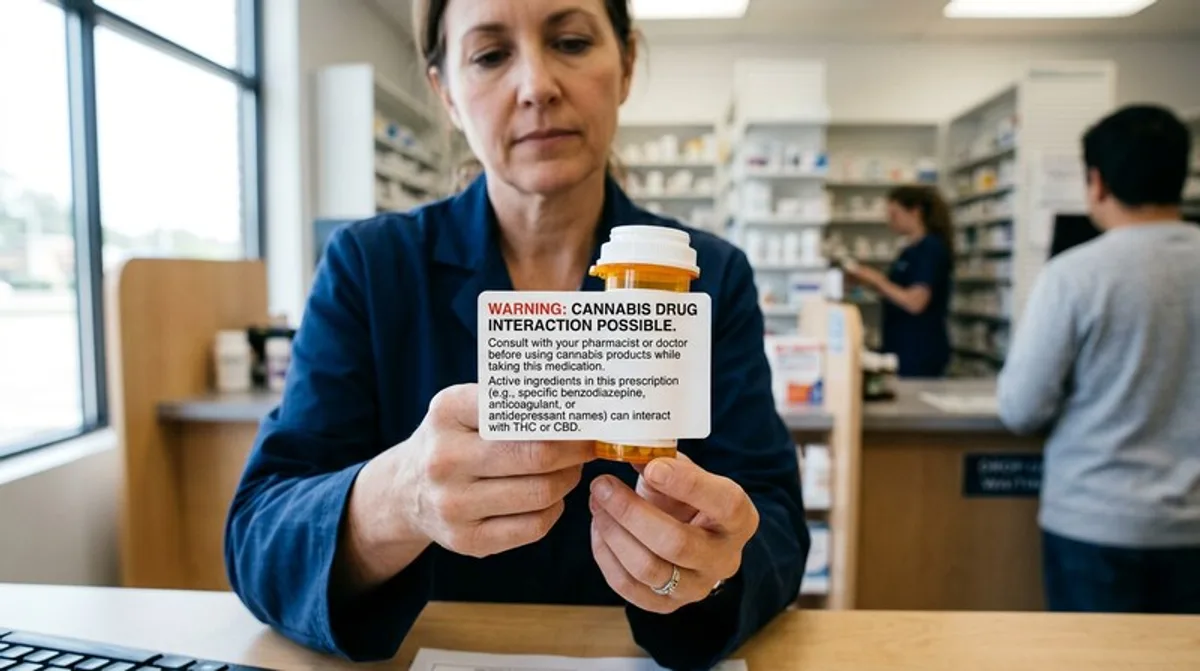
- Interactions with Levodopa: CBD inhibits CYP2C9 and CYP3A4 — can influence Levodopa levels. Medical supervision is important when combining treatments. Dose adjustments may be necessary
- Preference for CBD: Many neurologists recommend CBD-dominant strains or pure CBD for Parkinson’s disease. THC effects on cognitive function and balance can be problematic for Parkinson’s patients
- Fall risk: Sedation, dizziness and hypotension caused by cannabis increase the already elevated fall risk in Parkinson’s patients. Starting with a very low dose is essential
How cannabis affects the endocannabinoid system and pain:
Cannabis for epilepsy — CBD, Epidiolex, and anticonvulsant mechanisms:
Frequently asked questions about cannabis and Parkinson’s disease

Cannabis for restless legs: CBD, dopamine & studies
Cannabis & bones: CB2, osteoporosis & bone healing
Cannabis & testosterone: effect on male fertility
Cannabis quality: laboratory tests, pesticides & contamination
Home cannabis cultivation: rules according to CanG
Cannabis microdosing: low doses of THC & CBD