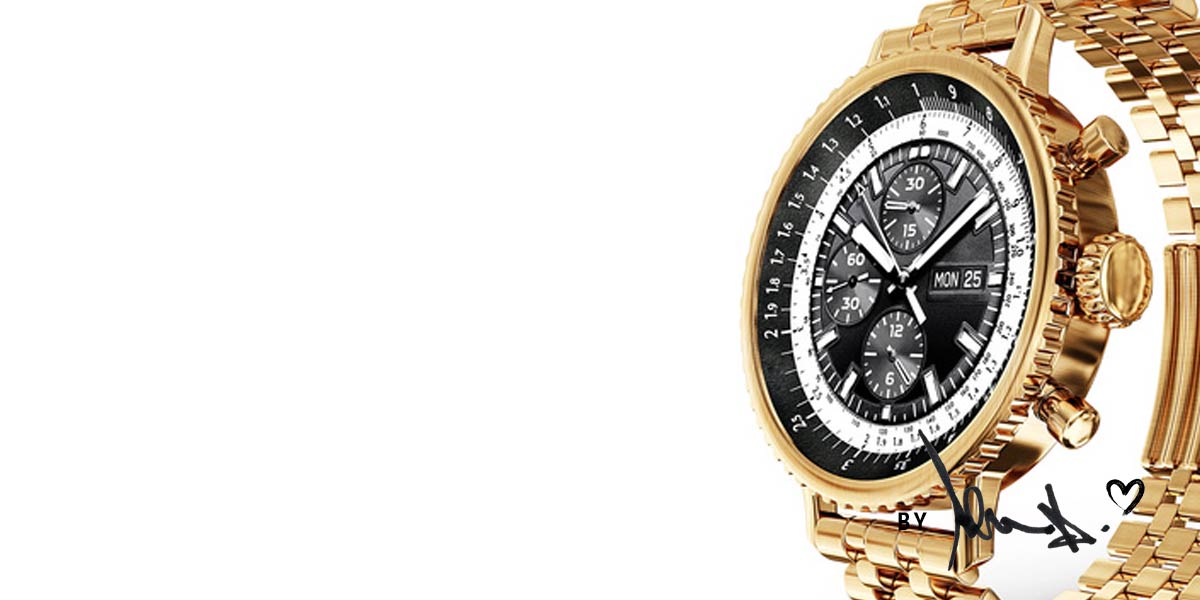
Top Jewelry Commercial – Who loves diamonds and gold will love them!
A single line of text has invented an entire industry: “A Diamond Is Forever,” written after midnight by the unmarried copywriter Frances Gerety, catapulted the share of diamond rings among U.S. brides from under 10 percent to over 80 percent — and was named the slogan of the century by Advertising Age. Jewelry advertisements are not just entertainment on the side. They shape desire, define luxury, and write cultural history. Whoever knows the best ads understands why shine is so much more than metal and stone.
What jewelry advertisements really sell — and why it’s never the product
Luxury brands do not communicate through product features. They sell archetypes. The snake stands for seduction and transformation, the diamond for eternity and commitment, gold for power and dignity. This symbolism is not by chance, but the result of decades of strategic brand communication. Whoever knows Gucci or Prada, knows: The strongest fashion brands build on exactly the same emotional codes — and jewelry brands have taken this mechanism to the extreme.
Jewelry commercials work with a specific visual vocabulary: extreme close-ups of surfaces, slow camera movements, natural light combined with controlled studio shine. The music is rarely random — and often more expensive than the entire production. The De Beers spot “Shadows” from the early 1990s used Karl Jenkins’ “Palladio” — the string quartet track became a classical crossover hit only because of the spot, not the other way around. Music makes jewelry immortal.
The fact that directors like Bruno Aveillan or Paola Kudacki are hired for jewelry commercials, who otherwise direct feature films, shows: These spots are mini-cinemas with budgets that challenge Hollywood productions. For everyone who wants to understand the visual language of luxury brands more deeply, our overview of all fashion brands A-Z offers the ideal starting point — from entry-level labels to haute couture brands.
“The best jewelry commercial makes you forget it’s advertising. It’s a short film that happens to feature a product.” — Industry insider on Cartier’s “L’Odyssée de Cartier”
- Jewelry spots sell archetypes, not products — snake, diamond and gold are cultural symbols
- Musik is often more expensive than the production — and creates the emotional core
- Author-directors bring cinematic aesthetics into the 3-minute spot
- Budgets on Hollywood level are the rule, not the exception
The most expensive jewelry commercials in history — numbers, directors, budgets
What distinguishes a great jewelry commercial from a good one is rarely the budget alone — but the budget says a lot about how seriously a brand takes its communication. Cartier’s “L’Odyssée de Cartier” was shot on over 30 sets in Paris and Prague, employed 70 set designers and combined real panther footage with CGI post-production at MPC — just the panther sequence cost approximately 800,000 euros in digital post-production. The entire production ran over six months. The result: a 3.5-minute spot that still captivates as much today as on the first day.
Chanel once again reached new heights with Nicole Kidman: According to Guinness World Records, the Australian star’s fee for the No.5 short film amounted to around four million US dollars — at the time of release, the highest advertising hourly rate in film history. Director Baz Luhrmann, known for “Moulin Rouge!”, brought his entire visual language into the two-minute runtime. The total budget: 33 million US dollars.
| Brand | Campaign | Director | Budget / Special Feature |
|---|---|---|---|
| Cartier | L’Odyssée de Cartier | Bruno Aveillan | Approx. 4 million €, 30 sets, 6 months production, real panther + CGI |
| Chanel | No.5 – The Film | Baz Luhrmann | 33 million USD, Nicole Kidman, world record salary |
| Bulgari | Serpenti – Magnificence Never Ends | Paola Kudacki | Zendaya, 75th anniversary Serpenti, visual essay aesthetics |
| Tiffany & Co. | About Love | Emmanuel Adjei | Beyoncé & Jay-Z, 128.54-carat diamond, rare archive photo |
| De Beers | A Diamond Is Forever | Frances Gerety (Text) | Century slogan, literally invented the engagement ring market |
| Swarovski | Holiday Campaign | N/A | Bella Hadid, social-first strategy, global reach |
Who wants to place jewelry within a broader fashion context will find in our analysis of Dior and Christian Dior and Dolce & Gabbana two brands that consistently view advertisements as an art form — with the same strategic ambition as the major jewelry houses.

Bella Hadid, Zendaya, Sonam Kapoor — when star power carries the ad
Bella Hadid for Swarovski: Contrast as a brand principle
Bella Hadid is one of the few models who elevate a campaign simply through her presence. For Swarovski, she did exactly that in the Holiday campaign: few words, maximum impact. The ad lives on contrasts — dark backgrounds, sparkling crystals, the striking face of the supermodel. Swarovski positions itself precisely between the mass market and real luxury, a balancing act that only a few jewelry brands handle as consistently. The social-first strategy behind it is just as calculated as the visual language itself.
https://www.youtube.com/watch?v=pZVXuPSGcmo
Who wants to learn more about the path into the modeling business: Our guide Becoming a Model — Tips and Castings provides an honest insight into the industry, including concrete application strategies for international markets.
Zendaya and Bulgari: 75 Years of Serpenti
The Bulgari campaign “Serpenti — Magnificence Never Ends” is no ordinary advertisement. To celebrate the 75th anniversary of the iconic Serpenti collection, Bulgari chose Zendaya as a cast member who herself stands as a symbol of transformation. Few know that a single Serpenti bracelet requires about 30 hours of manual work in the workshop — the Tubogas technique, which gives the snake its characteristic movement, cannot be fully automated to this day. Director Paola Kudacki stages the campaign as a visual essay on transformation: the snake as an eternal symbol of renewal, Zendaya’s elegance as a contemporary interpretation of a decades-old myth. The fact that animal prints like leopard and zebra keep appearing in the fashion world is no coincidence — the Serpenti motif is the most well-known and longest-lasting example of this cultural code.
Sonam Kapoor for Anant: Slowness as Strength
Elegance doesn’t need loudness. The spot by Anant for the “Single Lined Diamond Jewelry” line with Sonam Kapoor proves that slow visual language, dance, and reduced staging can be more effective than any editing rhythm. Kapoor embodies a form of grace rarely seen in Western European jewelry marketing — and that’s exactly what makes this spot one of the most interesting outliers in the genre. Anyone who believes jewelry advertising must necessarily be created in a Parisian studio will be proven wrong here. Men’s fashion and accessories are no longer seen as a niche, and the same applies to non-Western jewelry aesthetics: it is on its way into the global mainstream.
- ✓ Bella Hadid: Contrast aesthetics as brand positioning between luxury and mass market
- ✓ Zendaya for Bulgari: Transformation as central theme, 30 hours of handwork per bracelet
- ✓ Sonam Kapoor: slow visual language instead of editing rhythm — an underestimated style approach
- ✓ Star casting is never accidental — it is brand policy with symbolic value
- ✓ Global diversity in jewelry spots is not a trend, but a strategic market approach
Cartier, Armani, Pandora — three strategies, one product category
Cartier: The Panther and the Big Emotion
„L’Odyssée de Cartier” is considered a reference work among creative directors — and for good reason. Bruno Aveillan sends the Cartier Panther, the brand’s trademark since the 1910s, on a world tour through time and space. Russian winter landscapes, Chinese temples, a ball scene from the 19th century: Everything serves the purpose of positioning Cartier as a brand that does not sell watches or jewelry, but rather belonging to a certain vision of the world. The budget of around 4 million euros and six months of production time are less surprising than the result — a spot that feels timeless because it has timelessness as its only message. For a deeper insight into luxury marketing, a look at our analysis of Dolce & Gabbana is also worthwhile — a brand that has the same claim to staging, but implements it completely differently.
Emporio Armani Diamonds: Men and Jewelry without Clichés
The fact that diamonds don’t have to be exclusively staged for women has been proven by Emporio Armani with the black-and-white spot for the “Diamonds” collection. Male model Mathias Lauridsen breaks away from the classic jewelry advertising dramaturgy: no gift, no romantic clichés, instead a confident man who claims the shine of the gemstone for himself. This is not only visually strong — it is a cultural statement about the changing relationship between masculinity and jewelry. Those interested in jewelry for men will find a direct entry point into this growing category there.
Pandora: Closeness as a Strategy
Pandora works differently than the classic luxury brands — intentionally more accessible, emotional, everyday. The ad “Unforgettable Moments” doesn’t show celebrities, no exotic locations. Instead: real moments, a wintery mood, a piece of jewelry worn in everyday life. This is not a weakness, but a precise positioning decision. Pandora targets a customer group that doesn’t identify with Bulgari — and does so with a consistency that deserves respect. Anyone interested in current jewelry trends or looking for retro jewelry in an anti-minimalist style will find suitable guidance for every budget and occasion.
What really makes a big jewelry ad — and what sets it apart from everything else
Very few jewelry advertising spots are produced from the gut. Behind every major spot is a strategic framework, developed jointly by brand architects, creatives, and often cultural scientists as well. The underlying idea is: A jewelry ad is not a product film. It is a moving myth. Cartier sells the feeling of being part of a centuries-old tradition. Pandora sells the emotional moment. Bulgari sells transformation. Tiffany sells New York elegance — and has shown with Beyoncé and Jay-Z that even a 128-carat diamond can become a backdrop when the message is bigger than the stone.
Frances Gerety, the copywriter behind „A Diamond Is Forever”, never married herself. The slogan, which she wrote down on a notepad after midnight, remained unchanged for over 70 years — a world record in advertising history. This irony is not a minor detail: it shows that the strongest jewelry advertising messages do not arise from personal experience, but from a precise understanding of collective longings. Those who analyze ads understand luxury marketing — and vice versa.
Matching this, we recommend our overviews of the best fashion and fashion advertising spots as well as the top beauty and make-up advertising spots — because the strongest campaigns are always created where jewelry, fashion, and beauty come together. Those who also see jewelry as an investment should look into rare gemstones like Painit — one of the most valuable stones in the world, which does not appear in any mainstream ad, but surpasses every diamond in terms of rarity.
For everyone who sees jewelry not just as an accessory, but as part of a larger fashion world: Our A-Z overview of fashion brands provides a complete overview — and our analysis of gold bridal jewelry shows how strong the connection between jewelry advertising and real purchasing behavior still remains today.
- “A Diamond Is Forever” was written by an unmarried copywriter after midnight — and ran unchanged for 70+ years
- Cartier’s Panther Spot: 6 months of production, 30 sets, 800,000 € alone for CGI
- Nicole Kidman’s Chanel fee was a world record at the time of publication
- Bulgari Serpenti: 30 hours of handwork per bracelet — no automation can replace the Tubogas technique
- Karl Jenkins’ “Palladio” became a classical hit only through a jewelry ad — not the other way around
- Star-studded casts are always brand policy: Zendaya, Beyoncé, Bella Hadid represent transformation, power, and contrast — not by chance
- The strongest jewelry ad doesn’t sell a stone — it sells a worldview

Infused Kitchen at FIV: The new cannabis cooking portal

Cannabis Drinks: Smoothies, Tea, Golden Milk & Recipes

Cannabis Grillen: BBQ, Marinaden & Rezepte für den Sommer
Infused Kitchen: Cannabis recipes for baking, cooking, grilling & drinks

Social Media Ads: More Sales Through Targeted Online Marketing

Career start after studies: What recruiters are really looking for