





















Biotin Face Cream: What the Ingredient Really Does in Skincare
You probably know biotin from the drugstore shelf for hair and nails. By now the ingredient also shows up in face creams, serums and masks, and with it comes the question of whether it really makes a…
Contents
- Biotin: what the vitamin actually is
- Why brands put biotin in facial skincare
- What a cream can realistically do
- The formula decides
- Dry, oily and sensitive skin compared
- How the cream fits into your routine
- Sun protection remains a separate step
- How to recognise a suitable cream
- Frequently asked questions about biotin in facial skincare
- Conclusion
You probably know biotin from the drugstore shelf for hair and nails. By now the ingredient also shows up in face creams, serums and masks, and with it comes the question of whether it really makes a difference. We explain what is behind the vitamin, what you can realistically expect from it in facial skincare, what matters in the formula and how to find a suitable cream for your skin type. You will also find notes on routine, sun protection and the questions that come up most often before buying.
Biotin: what the vitamin actually is
Biotin belongs to the B vitamins and is also known as vitamin B7. It is water-soluble, so the body cannot store larger amounts and depends on a regular supply from food. You find it in eggs, legumes, nuts, oats and liver. It matters for metabolism because it helps the body process fats, carbohydrates and proteins. That biotin contributes to the maintenance of normal skin and normal hair is an approved health claim for intake through the diet.
This is exactly where a closer look pays off. What the body does with the vitamin from the inside cannot simply be transferred to a cream you apply on the outside. The evidence for biotin in cosmetics is far thinner than for nutrition. A face cream neither replaces a balanced diet nor compensates for a deficiency.
Fun Fact: Biotin used to be called vitamin H. The H stood for the German "Haut und Haar" (skin and hair), because the substance was long associated mainly with those two areas.
Why brands put biotin in facial skincare
Brands use biotin as a care ingredient that rounds off the active profile of a cream. It is almost never used on its own, but in a formula with substances that bind moisture and keep the skin supple. These include glycerin, panthenol, squalane, ceramides or plant oils. On the ingredient list (INCI) you simply find biotin under this name.
You see it more often these days because of a trend: more and more people want to know what individual ingredients do in their skincare instead of going by brand names alone. If you specifically look for a biotin face cream, you will therefore find not only classic creams but also serums, masks and care products with several actives. Behind the name on the front of the pack, it is worth checking the complete ingredient list.

What a cream can realistically do
The main job of any face cream is unspectacular but important: it should limit moisture loss and feel pleasant on the skin. Done well, it softens rough patches, takes away tightness and makes the surface look smoother. How well that works depends on the whole formula, from texture to the dosage of each ingredient, and not on a single item on the label.
That is why skepticism toward big promises is justified. A care cream can support the skin but cannot treat a disease. If you struggle for weeks with itching, persistent redness, eczema or stronger acne, that belongs in the hands of a dermatologist and not in the cosmetics drawer.
The formula decides
Water is usually the base of a cream, joined by fats and oils, emulsifiers and humectants. Biotin complements this mix but does not determine its quality on its own. It gets interesting with the companion ingredients, because they decide who the cream suits.
- Glycerin binds water in the upper skin layer
- Ceramides support the natural skin barrier
- Squalane softens the skin without weighing it down
- Panthenol soothes and cares for irritated skin
- Niacinamide suits combination skin and blemishes
Fragrances deserve a look too. Many people tolerate them without trouble, while sensitive skin quickly reacts with redness or burning. In that case a simply formulated cream without a strong scent is often the better choice. You can find more on the basics in our article on proper skincare with face cream, serum and toner and in the overview of facial care from cleansing to routine.

Dry, oily and sensitive skin compared
Before you buy a cream, you should know where your skin stands. If you are unsure, our guide helps you to determine your skin type. After that, the choice narrows down considerably.
With dry skin, there is often a lack of oil or the skin loses too much moisture. It feels rough, tight and sometimes shows fine flakes. A biotin cream can be an option here if the formula also contains rich care ingredients such as ceramides, squalane, shea butter or plant oils. In winter the texture can be richer, in summer a lighter version is often enough. How to supply your skin with additional moisture building blocks is also shown in our article on N-acetylglucosamine as hyaluronic food.
Oily and blemish-prone skin shines faster and tends to clogged pores. That does not mean it needs no moisture, quite the opposite: overly aggressive cleansing can worsen the skin feel. A gel cream or lotion with a light texture is better. The note "non-comedogenic" offers some orientation, but it is no guarantee. How to keep cleansing gentle is shown in the guide to facial cleansing for all skin types.
Sensitive skin likes things simple. The fewer products and additives, the easier it is to trace a reaction. Start with a short routine and introduce only one new product at a time.
Tip: Test a new cream first on the inner elbow or behind the ear for three to four days. If the skin stays calm, you can try it on your face.
How the cream fits into your routine
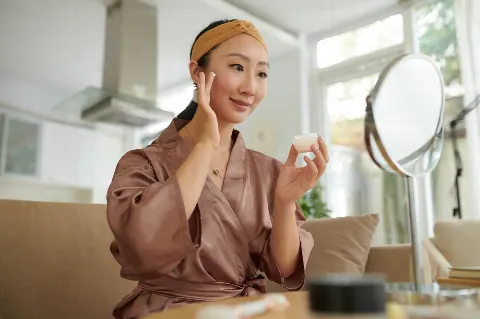
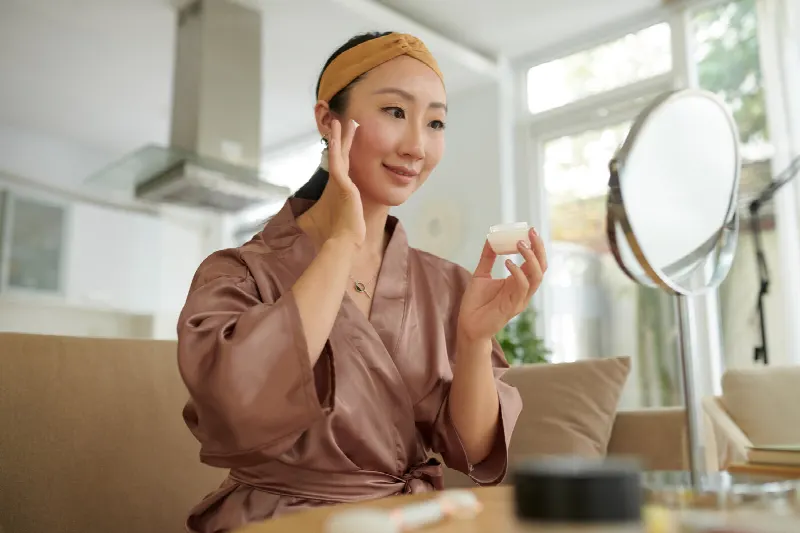
A good routine does not need many steps. In the morning, gentle cleansing, cream and sun protection are usually enough. In the evening, thorough removal of make-up and sunscreen comes first, followed by care. Biotin cream is usually applied after a serum, for example after a hyaluronic serum, and in the morning before sun protection. A pea-sized to cherry-stone-sized amount is enough, spread over face and neck without rubbing hard.
How to order the steps sensibly is explained in our article on the facial care routine for morning and evening. If you work with actives like retinol, you should plan the cream in as well, because it helps to cushion dryness. The rule behind it is simple: consistency beats variety of actives. A product you use every day achieves more than three products that vanish into the bathroom cabinet after a week.
Sun protection remains a separate step
A face cream does not automatically protect against UV radiation, not even with biotin. The packaging must state a sun protection factor explicitly. UV light is one of the most important factors in visible skin aging, so protection belongs firmly in the morning routine, as the last care step. It must be renewed during longer stays outdoors. Which value suits which type is covered in the guide to sun protection for your skin type and the right SPF.
The reverse also applies: a night cream without sun protection does not work as daytime protection. And a day cream with SPF does not automatically have to replace the evening care if texture or formula do not fit. Our article on protection and care through the right day cream offers guidance.
How to recognise a suitable cream
The choice starts with your skin type. The product description should clearly state whether the cream is meant for dry, normal, oily, mature or sensitive skin. After that, look at texture, companion actives and fragrances. If you want an overview of the market, face creams compared is a good place to start.
- Skin type clearly stated on the packaging
- Complete ingredient list is available
- Pump dispenser or tube instead of open jar
- Shelf life after opening is indicated
- Fragrances match your skin tolerance
Price and brand name say only so much about suitability. An expensive cream does not have to suit your skin better than an affordable product with a well-thought-out formula. If you prefer to keep your skincare in your own hands, you will find ideas in DIY care products from natural ingredients. If you are drawn to Korean skincare, where layers and textures play a big role, take a look at the K-beauty routine and the idea behind glass skin.
Recommendation: Introduce only one new product at a time and give it two to four weeks. That way you can tell whether the cream suits you and assign any reactions clearly.
Frequently asked questions about biotin in facial skincare
Is biotin in cosmetics the same as biotin as a dietary supplement? The substance is the same, the route is different. Cosmetics act on the skin surface, while supplements and food act from the inside. The two cannot be equated.
Can a biotin cream remove wrinkles? No. A well-formulated cream can provide moisture and make the skin look smoother. Deep wrinkles do not disappear because of it.
Which skin type suits biotin skincare? In principle several, what matters is the formula. Rich formulas suit dry skin better, light gel creams suit oily skin.
Do I need to watch out for anything if I also take biotin supplements? High-dose biotin can distort lab results, for example in thyroid or heart tests. Discuss supplements with your doctor.
How long until I see a change? The feel and suppleness of the skin often improve within a few days. To judge tolerance, give it two to four weeks.
Conclusion
Biotin is a sensible building block in facial skincare, but not a miracle cure. Whether a cream suits you is decided by the whole composition, skin type, texture and tolerance. Anyone who checks ingredients consciously, introduces new products step by step and uses sun protection in the morning makes a better choice than reaching for the next big beauty promise. For more inspiration on skincare, see the Beauty Guide XXL.