
























Storing Cannabis properly: preserving freshness, potency and quality
Since legalization, adults in Germany may store up to 50 g of cannabis at home — the question of how to do this optimally is relevant. Improper storage causes THC to break down quickly…
Contents
- The four enemies of cannabis: light, heat, air, and humidity
- How quickly does cannabis lose potency?
- The best container: glass beats plastic
- Temperature and location: Where to store cannabis?
- Humidity: Boveda Packs and Alternatives
- Recognizing and preventing mold
- Legal storage rules according to KCanG
- Frequently asked questions about cannabis storage
Since legalization, adults in Germany may store up to 50 g of cannabis at home — the question of how to do this optimally is relevant. Improper storage causes THC to break down quickly, promotes mold, and makes cannabis unusable sooner. What science says about proper storage.
The four enemies of cannabis: light, heat, air, and humidity
THC is an unstable compound that breaks down due to external influences. The main enemies:
- UV light: Ultraviolet light accelerates the breakdown of THC into CBN (cannabinol). CBN has significantly weaker psychoactive effects. Light is the strongest degradation factor — never store cannabis in the sun or under neon light.
- Heat: Above 25°C accelerates oxidation and microbial activity. Above 30°C, terpenes begin to evaporate — aroma and effect profile change. Heat is the second strongest enemy.
- Air (oxygen): Oxidation breaks down cannabinoids. Air also increases the risk of mold growth due to aerobic microorganisms. Airtight containers are a must.
- Humidity: Too dry: Terpenes evaporate, trichomes become brittle, cannabis crumbles into dust. Too moist: Risk of mold (especially Botrytis cinerea). Optimal range: 55–65% relative humidity.
How quickly does cannabis lose potency?
Studies (among others by UNODC analytics) show the THC degradation over time at room temperature and light exposure:
- 1 year: ~16% THC loss
- 2 years: ~26% THC loss
- 4 years: ~41% THC loss
With optimal storage (dark, cool, airtight), this process slows down significantly. With poor storage (warm, bright, open), the degradation can be much faster.
The best container: glass beats plastic
Container comparison:
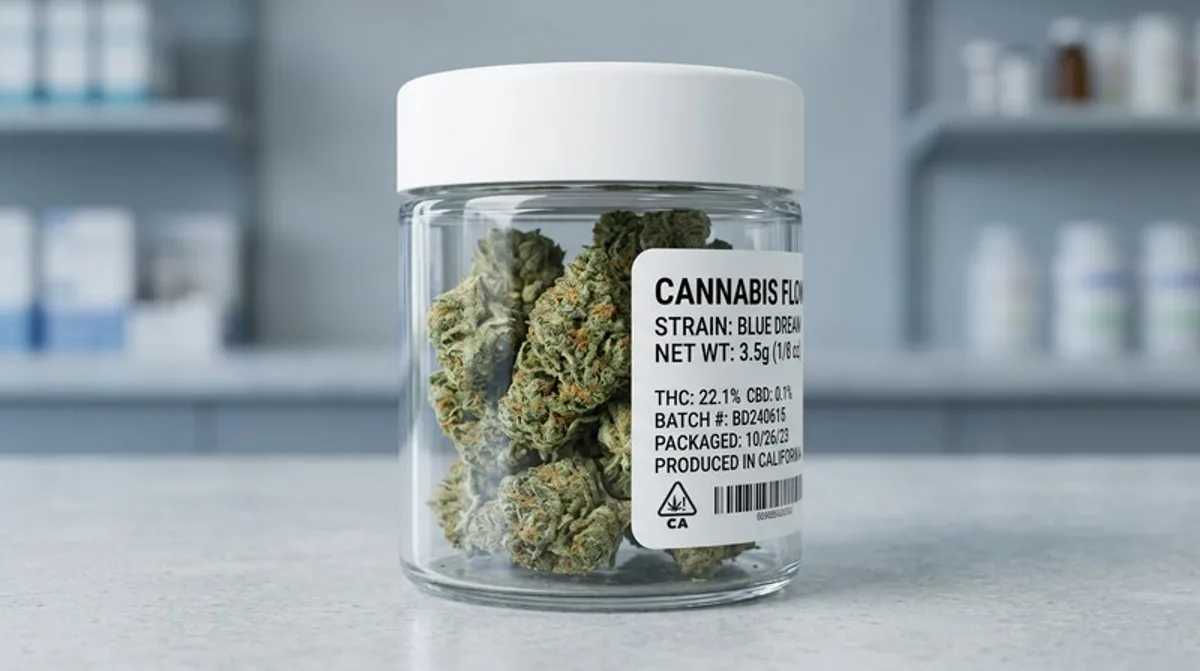
- Glass jars (Mason jars): The best option — completely airtight, no plastic off-gassing, easy to clean, affordable. Dark or brown glass provides additional protection from light.
- Plastic bags/zip lock bags: Worst option — plastic is gas permeable (oxygen diffuses through), static charged (trichomes stick to the walls), and releases plasticizers. Only suitable for short-term transport.
- Metal tins: Good for light and air protection, but can absorb odors and corrode from moisture. Less ideal for long-term storage than glass.
- Wooden boxes: Traditionally popular — wood absorbs moisture and can promote mold growth. Only useful with a glass inner liner.
- Vacuum containers: Good option for long-term storage — removes oxygen completely. However, vacuum sealing fresh, still moist cannabis can promote mold growth.
Temperature and location: Where to store cannabis?
Recommendations:
- Ideal: 15–21°C, dark, even temperature — a cabinet or drawer away from heat sources (heater, stove, electronics)
- Refrigerator: Not recommended — temperature fluctuations when opening/closing promote condensation. Condensation water on cannabis increases the risk of mold. Odor transfer to other food items.
- Frozen storage: Possible for long-term storage (months to years) — however: trichomes become extremely fragile at -18°C and fall off when thawing. Only suitable for flowers that will later be processed into extract. Not suitable for fresh consumption.
Humidity: Boveda Packs and Alternatives
For precise humidity control:
- Boveda Packs (62% RH): Industry standard for cannabis storage. Maintain a constant relative humidity at 62% — add or remove moisture as needed. Replace when the pad becomes hard (used up).
- Integra Boost (55% or 62% RH): Alternative to Boveda, similar function, with color indicator for usage.
- Lemon peel / bread: Folk remedy for rehydrating too dry cannabis — works in the short term, but increases the risk of mold due to uncontrolled moisture and sugar. Not recommended for long-term storage.
Recognizing and preventing mold
Mold on cannabis is a serious health risk — especially when inhaled:
- Mold looks like white, gray, or greenish fluff — different from trichomes (trichomes shine, mold is dull)
- Scent: musty, damp, earthy — different from normal cannabis aroma
- Do not consume moldy cannabis — mycotoxins can damage the lungs, especially dangerous for immunocompromised individuals
- Prevention: <62% RH, cool temperature, good air circulation during drying/curing
Legal storage rules according to KCanG
The KCanG stipulates for home storage:
- Store a maximum of 50 g at home
- Child and youth protection: cannabis must be stored in a way that children cannot access — lockable containers or secured cabinets
- Separate storage is recommended — not among household products or food items
Cannabis strains and their differences in shelf life: Indica, Sativa and Hybrid Comparison. Growing your own and how to grow cannabis: Growing cannabis at home. Vaporizer vs. other consumption methods:
Only properly stored cannabis retains its quality — how to recognize it in the first place:
Before cannabis is stored, it must first be harvested and properly handled: