


















Prefabricated house: advantages and disadvantages at a glance, as well as costs and types of houses compared
Prefabricated house – The desire for your first own home is very strong, especially among young adults, and it is a big step: buying a house. Many feel the need to start a family and then…
Contents
- Prefabricated house: what does it mean?
- Advantages and disadvantages of a prefabricated house: fast, low prices, inflexible?
- Prefabricated house: who is this type of house suitable for?
- Energy-efficient prefabricated houses: passive house, low-energy house & Co.
- Building a prefabricated house: Construction time and show case
- Turnkey house: from design to moving in
- Comparison: Prefabricated house and solid house – who wins?
Prefabricated house – The desire for your first own home is very strong, especially among young adults, and it is a big step: buying a house. Many feel the need to start a family and then live in their dream home. If you intend to fulfill this desire, you should start asking yourself what kind of house you want to live in – bungalow, semi-detached house or rather the country house – when you want to move and especially what your financial situation is. If you want to move quickly and don’t want to spend a lot of time building a house, you should choose a prefabricated house. In this article you will find everything you need to know about building a house. What should you look for in a supplier, what are the prices, comparisons between the different types and do you want to assemble your house yourself or have it ready with the keys? Click here to return to the overview: House types at a glance.
Prefabricated house: what does it mean?
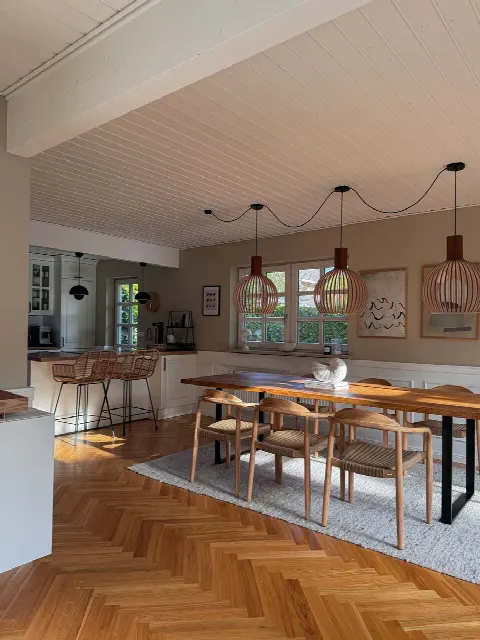
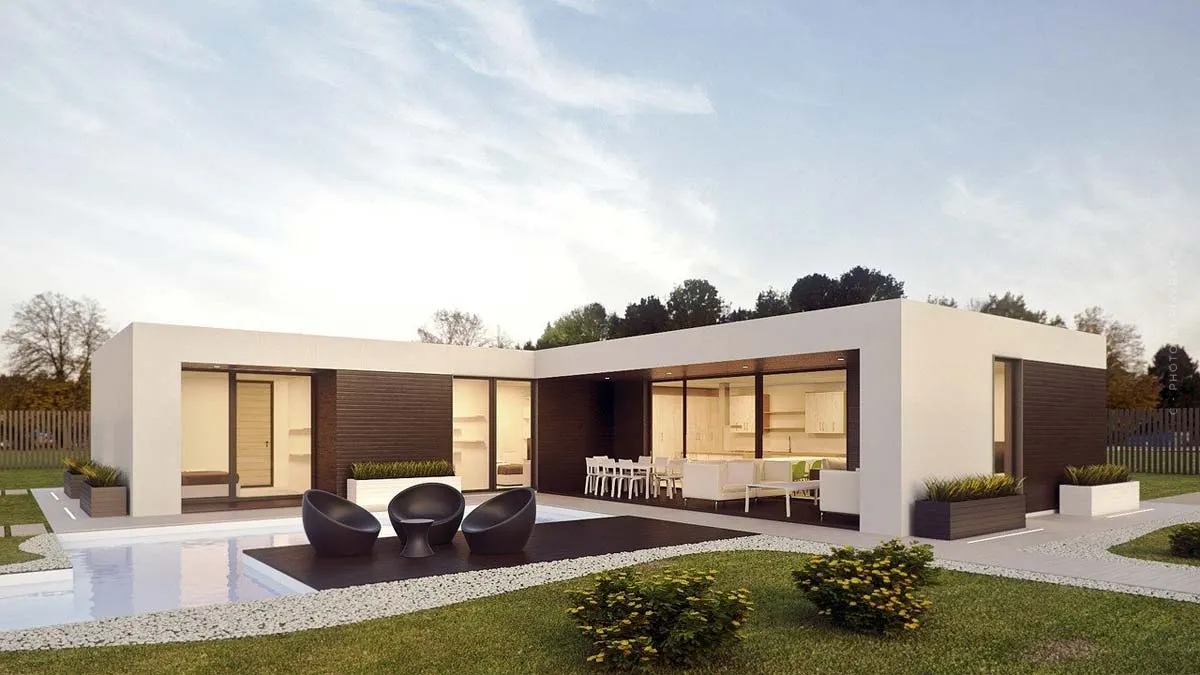
What is a prefabricated house really? This question is very difficult to answer because this type of house is very varied. Most suppliers have a large range of prefabricated house types and you have the dilemma of choice. Do you want to live in a detached house? In a residential complex or rather in a bungalow? With a basement, garage and garden? These are all important aspects that you should and can consider when designing your house. Because a prefabricated house is above all one thing: versatile.
Tip! In this article you can find videos with testimonials from builders and experts that you can also benefit from: Buy or build a house?
Looking for the right house? Then take a look at our guide! Here you will find definitions, meanings and lots of information: Types of houses from A to Z
Features: special construction, many types of houses possible
The main characteristic of a prefabricated house is the special construction method. It is not built stone by stone on site. The individual elements of the house are created in production halls and then simply lifted and assembled on your property. The main material used in this type of house is wood. However, you have the option to mix it with concrete or lightweight concrete to make it more weather-resistant. Another special feature is the fast construction time and lower costs compared to a traditional house. So, if you want to move into your home quickly, you should definitely consider a prefabricated house.
Building services: electrical wiring, plumbing & co. planned from the beginning
It doesn’t matter if you want to build a prefabricated house or a solid house. A new building is almost always modern and cutting-edge in terms of technology. The special thing about a prefabricated house is that the construction services are included in the structural elements from the beginning. You have the advantage of having a single supplier who takes care of all areas of your home. This means that the electronics don’t have to be coordinated with a third person/company and are integrated and planned from the start. Only advanced heating systems are used and, of course, energy efficiency is taken into account.
Advantages and disadvantages of a prefabricated house: fast, low prices, inflexible?
The main advantages of a prefabricated house are mainly the fast construction time and low construction costs. Despite this, it is also important to keep in mind that there are some disadvantages with this type of house that should not be overlooked. The question to ask is: solid construction or prefabricated house. Here we will present the advantages and disadvantages of a prefabricated house so that you can form your own opinion.
Advantages: quick construction times and lower costs
As already mentioned, the most obvious advantages are the fast construction time and the lower construction costs compared to a solid house. The ease of planning is also a plus, since there is only one point of contact for all aspects of the house construction. The building services are already coordinated during the planning phase and are taken into account in the production of the individual building components. At the same time, new prefabricated houses usually have a high level of energy efficiency and are also at the forefront in this area. Another advantage is that the construction can take place regardless of the weather.
- Fast construction time
- Lower construction costs
- Good planning possibilities thanks to a single point of contact
- High energy efficiency
- Integrated building services
- Construction independent of weather conditions
Disadvantages: almost no design options
One of the disadvantages is limited individuality. With a prefabricated house, you cannot design the layout yourself and have to lower your standards a bit. Moreover, the quality of the building materials is not as good as that of a solid construction, which means the acoustic insulation is poorer. This is also a reason why the resale value is lower.
- Almost no design options
- Poor acoustic insulation
- Low resale value
Source: Prefabricated house (Lukinski.de)
Prefabricated house: who is this type of house suitable for?
Who is a prefabricated house suitable for and who can live in it? Naturally, it is up to each person to decide where and in which house they would like to live. However, a prefabricated house is particularly suitable for certain groups of people due to its concise advantages. We have summarized and listed them for you.
Families: quickly in the new house
Young families are probably the main people interested in a prefabricated house. As you have already learned throughout the article, a prefabricated house is inexpensive and built quickly. This makes it very attractive for young adults. Usually, these people don’t have enough money to afford a large, solid house and therefore need to take out a smaller loan for this type of construction. At the same time, with a prefabricated house, you don’t have to worry about all the little things. You have a single contractor who oversees everything and gets things moving quickly. In the meantime, you can take care of your children or go to work. So there’s no need to spend a lot of time.
Older people and retirees
A prefabricated house is also ideal for retirement homes or the elderly. The main issue here is the lack of work. You should sit down with your supplier at the beginning and plan the construction. After that, everything will be done by yourself and you won’t have to worry about small details. There are also bungalow-style prefabricated houses. This type of house is particularly attractive for the elderly because there are no stairs. If you want to learn more about bungalows
, you are invited to take a look at our article.
Energy-efficient prefabricated houses: passive house, low-energy house & Co.
Energy efficiency is an important topic. Our generation, in particular, must pay special attention to our environment, and everyone should do their part. This should also be considered when building houses. New buildings are constructed according to the latest standards and must therefore follow various guidelines. High-energy-efficiency construction is also an important topic for prefabricated houses. Here you will find everything you need to know about this important field.
Energy-efficient building with insulation, solar energy and more
The modern method of building a prefabricated house brings with it mainly a saving effect. The various elements are made in advance, which has the advantage of not wasting materials. Everything will be updated and you will also have the possibility to build your prefabricated house as a Plusenergierhaus. It is better to find out in advance what your contractor offers and if you agree. If you want to learn more about energy-efficient construction, you can read everything you need to know in our guide.
Tip! To learn more about types of low-energy houses, passive house and zero-energy house, click here!
Building a prefabricated house: Construction time and show case
If you decide to buy a prefabricated house and have it built from scratch, you will need to decide on a certain type of house and calculate and plan the expected construction time. You can read more about the topics of construction time and model house below.
Construction time: Planning, building permit & Co.
The construction time of a prefabricated house is, in any case, significantly shorter than that of a conventional building, but it is never possible to specify an exact duration, because something can always come up and the customer’s wishes vary. The great advantage of a prefabricated house is that the individual components of the house are built in advance in a factory and only need to be assembled on site. This usually takes only a few days and can be done in any weather. In order to plan approximately, we have compiled a list with approximate times for each phase of work.
- Planning: up to several weeks
- Building permit: 0.5-3 months
- Production: 2-5 weeks
- Shell: 1-3 days
- Interior fittings: 8-12 weeks
Show the houses: examples and models
This is probably one of the biggest advantages of choosing a prefabricated house. You have the opportunity to inspect your future home in advance and see if everything meets your expectations. Many suppliers have a small town of model homes that you can visit. Get an idea of their range and also take the opportunity to step inside. You can think about the interior design, plan your home, and even make changes if you want.
Turnkey house: from design to moving in
Not all prefabricated houses are the same. Unlike a traditional house, with this type of construction it is possible to deliver the house to the customer in different stages. This naturally results in a price difference between the houses. For example, you have the option of having only individual parts of your house manufactured and doing the final construction yourself. This would save you money. You can find out more about the different stages here.
Different stages of prefabricated houses: Kit house or prefabricated house
Case in kit: with this variant of prefabricated house, the supplier does not carry out any construction work and is only responsible for the supply of materials. In this case, the customer is responsible for the construction and is also responsible for it. One possibility would be to request from the supplier hollow wall elements and then fill them with concrete on site. This would be a solid construction variant. In general, however, it is advisable that only experienced builders construct a kit house.
Finished houses: if a house is delivered in a weather-resistant condition and only the basic internal work remains to be done, it is called a finished house. For example, non-load-bearing internal walls could still be installed, pipes or floors could still be laid. If the house is delivered at this stage, the builder/customer still has some work to do before moving in, which saves money but also requires time. Here as well, the builder should bring craftsmanship experience and support (friends, family).
What does turnkey mean?
The house is called turnkey when it is completely finished. It is weather-resistant and all the pipes and floors have been laid. The customer only needs to put in their personal furniture, paint the walls if necessary, and decorate. No further personal contributions are needed, but everything should still be specified in the contract so that nothing is missing at the end.
Advantages and disadvantages of a turnkey house
One of the advantages of a turnkey house is certainly the time saved. In most cases, the construction of a prefabricated house takes between five and nine months. During this period, you will hardly have to deal with the construction of your house and will have time for other things. In addition, all costs have already been clarified in advance and all the work is supervised by the supplier.
A disadvantage is certainly the cost. If you don’t have experience, you don’t have the opportunity to buy the house in an earlier phase and do the rest yourself. If you have experience, you will lose time and certainly your nerves on the construction site. You also have little freedom to design the layout of the rooms.
Comparison: Prefabricated house and solid house – who wins?
Prefabricated house or solid house? That’s the question here! Now you have read about a prefabricated house and have learned the advantages and disadvantages. Now you have to decide whether you want to choose this type of house or if you are more interested in a solid construction. We have compared the two types of houses and summarized them for you. If you want to know more about solid houses, you are invited to take a look here.
Prefabricated house: inspection possible before construction
You have already learned about the advantages in the article. In summary, it is fast and the costs are low and fixed from the beginning. You can also get an idea of your future home in advance by visiting a park with model homes.
- Short construction time
- Low and fixed costs
- Visit to a model home park
One of the disadvantages is that the room layout of a prefabricated house is rarely changeable and this is only possible with a few suppliers. Good thermal insulation is only available in highly energy-efficient homes.
- Limited individual room design
- Thermal insulation only in highly energy-efficient homes
Solid house: robust, individual design and resale value
The advantages of a solid house, for example, are that you can plan from the beginning and customize the design of the house and rooms. As long as there are no load-bearing walls, you can build rooms according to your wishes. Another advantage is the more balanced indoor climate, better quality, and higher resale value.
- Individual room design
- Better indoor climate
- Better construction quality
- Higher resale value
The higher price and longer construction times are certainly a disadvantage, especially if you want to move into your house quickly. In addition, it takes more effort and you have to put in a lot of energy to build a house. Unlike a prefabricated house, you don’t even have the possibility to inspect your future house in advance, since it is built individually according to your ideas. In addition, you don’t just have one, but several suppliers with whom you have to clarify everything.
- Long construction time
- Higher costs
- More effort
- Preview not possible