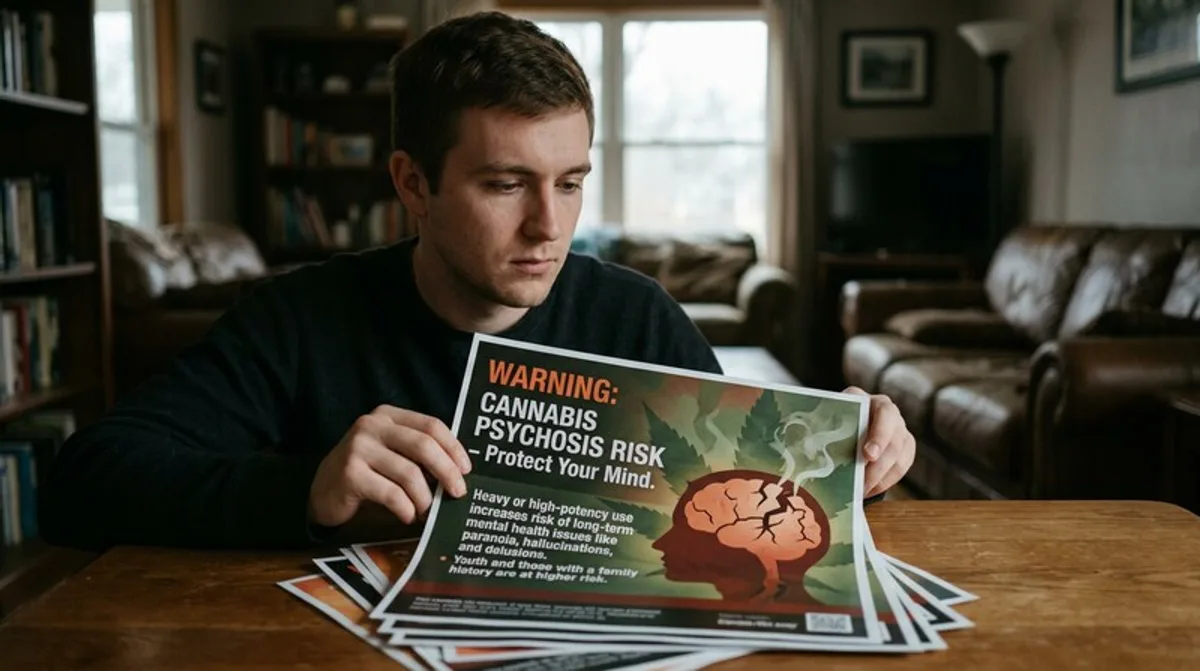
Cannabis and Psychosis: Risks, Facts, and Who Is Affected
The question of whether cannabis causes psychosis or schizophrenia has been debated for decades — often politically charged, rarely nuanced. The truth lies somewhere between “cannabis is harmless” and “smoking cannabis makes you crazy”: there is a real, but context-dependent risk that is low for most people — but significant for a vulnerable minority.
What is cannabis-induced psychosis?
An acute cannabis-induced psychosis is a temporary psychotic episode triggered by THC consumption. Symptoms:
- Paranoia, fear of persecution
- Hallucinations (mainly visual, rarely auditory)
- Racing thoughts, disorganized thinking
- Dissociation (“I am not really here”)
These acute episodes are usually self-limiting — once THC is metabolized, the symptoms subside. This can take hours to a few days. They do not require specific medical treatment, although short-term medical supervision may be necessary in severe cases.
Does cannabis increase the risk of schizophrenia?
This is actually the difficult question. The answer is: Yes, in vulnerable individuals — but causality is hard to prove.
What the research shows:
- Meta-analyses (among others Zammit et al., Lancet) show that cannabis users have about twice the risk of developing schizophrenia spectrum disorders. With high-risk cannabis (>10% THC), the odds ratio increases up to 5.
- Dose-response relationship: The higher the THC content and the earlier the onset (youth), the higher the risk.
- Genetic vulnerability: People with a family history of psychosis or certain genetic variants (e.g., COMT gene variants) have a significantly increased risk.
- Chicken-and-egg problem: Some studies suggest that people predisposed to psychosis tend to consume cannabis more frequently (self-medication hypothesis) — which obscures causality.
Das Risiko ist real — aber es betrifft hauptsächlich Menschen mit einer Veranlagung, die mit hochpotentem THC in jungen Jahren beginnen.
Who has the highest risk?
Risk factors for cannabis-associated psychoses:
- Familial predisposition: Schizophrenia or other psychotic disorders in the family
- Early age of first use: Starting before the age of 16 — the adolescent brain is especially vulnerable
- High-potency strains: THC contents above 15–20 % significantly increase the acute psychosis risk
- Consumption frequency: Daily use vs. occasional use — significant difference in risk profile
- No CBD counterbalance: Pure THC without CBD (as with many modern high-THC strains) is riskier than full-spectrum products — CBD has antipsychotic properties
- Existing mental disorders: Bipolar disorder, borderline personality, previous psychotic episodes

Does CBD protect against THC-induced psychoses?
This finding is one of the most interesting in cannabis research: CBD (cannabidiol) shows antipsychotic properties in studies — it dampens the paranoid and dissociative effects caused by THC.
This explains why traditional hemp varieties with a balanced THC-CBD ratio caused fewer psychoses than the modern, highly bred THC-only strains. In countries with a high market share of high-THC products (UK, Netherlands during certain periods), cannabis psychosis rates increased significantly.
For medical patients: This is an argument in favor of full-spectrum extracts containing CBD rather than pure THC distillates.
What to do in case of warning signs?
Early signs that suggest a break or consultation:
- Increasing paranoia or distrust even when sober
- Hearing voices or sounds that others do not hear
- Feeling watched or followed without a specific reason
- Strong depersonalization (feeling detached from oneself)
- Family members report unusual behavior
These are not reasons for panic — but reasons to see a doctor. The earlier a developing psychosis is recognized, the better the prognosis. Young people with risk factors should avoid cannabis — not as a moral judgment, but as a medical recommendation.
Background on the mechanism of action of THC in the brain:
Polysubstance use is a central risk factor for cannabis-induced psychoses:
Adolescents under 18 are particularly at risk:
Psychosis and depression share risk factors and are favored by chronic high-dose consumption:
Below the psychosis threshold: Cannabis-induced anxiety and paranoia as more common reactions: Cannabis and Anxiety: When THC Helps and When It Triggers Fear — why high THC doses can trigger panic attacks and who is particularly vulnerable.
Frequently Asked Questions About Cannabis and Psychosis

Infused Kitchen at FIV: The new cannabis cooking portal
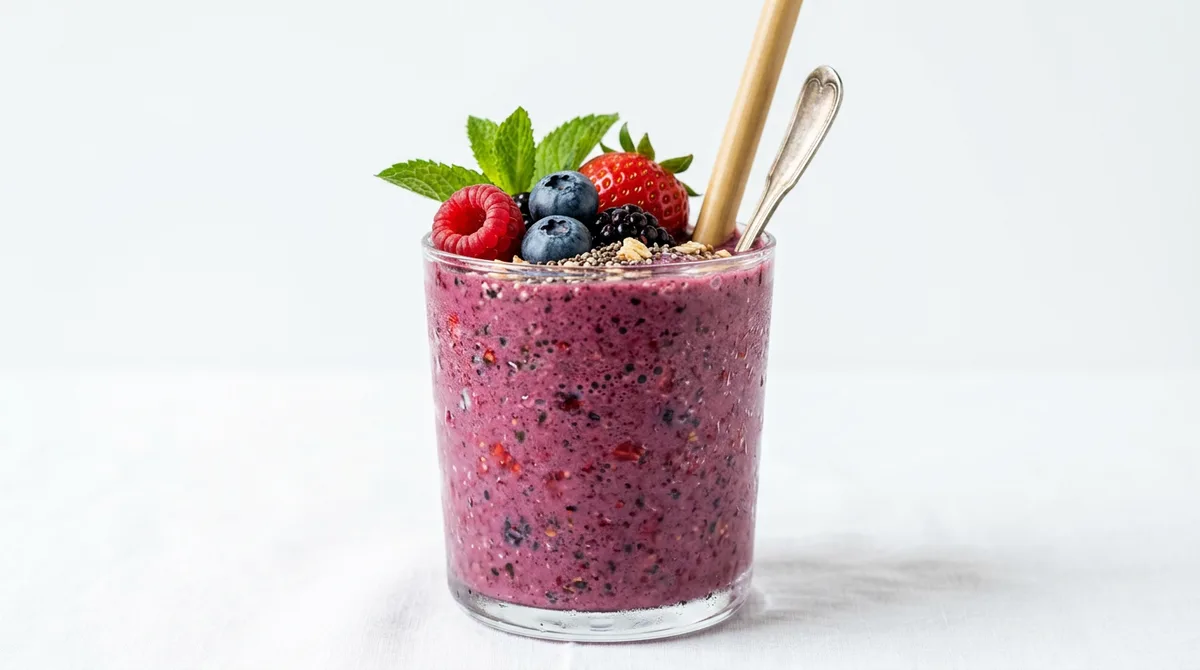
Cannabis Drinks: Smoothies, Tea, Golden Milk & Recipes
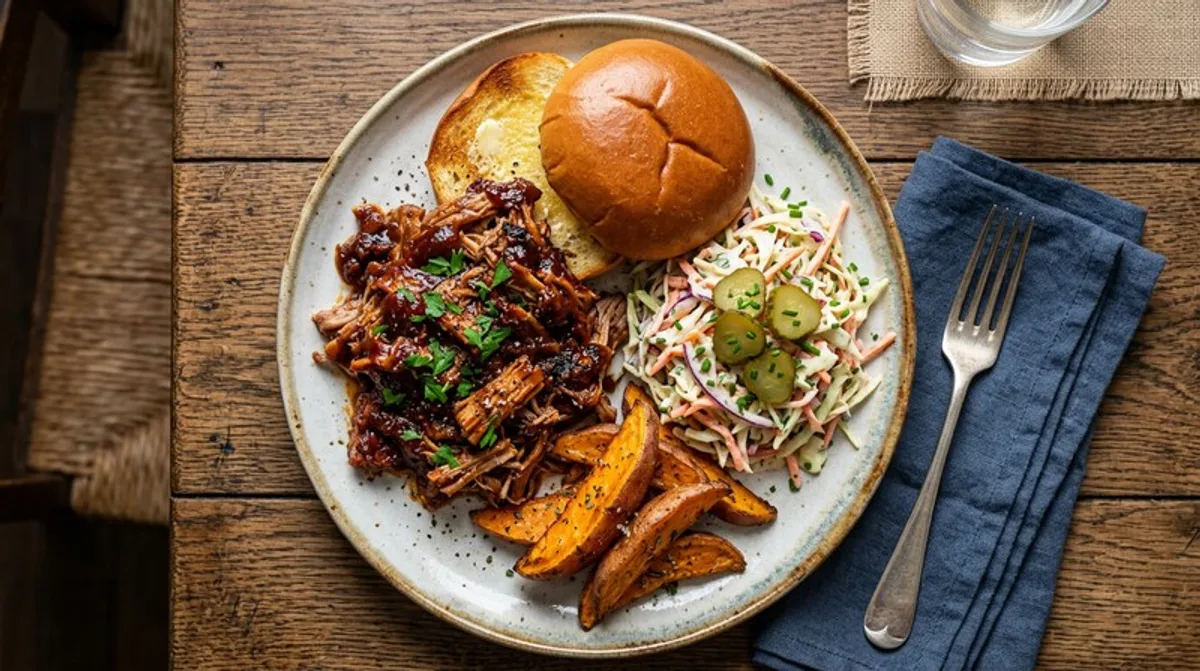
Cannabis Grillen: BBQ, Marinaden & Rezepte für den Sommer
Infused Kitchen: Cannabis recipes for baking, cooking, grilling & drinks

Social Media Ads: More Sales Through Targeted Online Marketing

Career start after studies: What recruiters are really looking for