Bobkova x Berlin Fashion Week 2024: Japanese tailoring & urban aesthetics
A Ukrainian designer who has been delivering season after season since 1998, whose atelier in Kyiv continues production even under air raid alerts, and who presented over 30 looks on the Berlin runway, demonstrating what Japanese tailoring discipline means outside of Tokyo – Kristina Bobkova’s appearance within the framework of Berlin Contemporary is not a newcomer story, but rather the late international emergence of a founding generation. Those who dismiss the show with the label “fascinating find from Eastern Europe” have missed the actual point. Bobkova is part of the establishment – just one that has existed two decades beneath the radar of the West.
The new BFW format, curated by Reference Studios, has said goodbye to seasonal noise and selects only about 12 to 15 labels per issue. Bobkova fits this profile exactly – and at the same time delivers the most intriguing outsider story. Those who want to follow further currents in parallel will find a compact overview of all fashion brands from A to Z with us.
Why Bobkova shows in Berlin – and what this means structurally
Since 1998, Kristina Bobkova has presented her collections at the Ukrainian Fashion Week, which was itself founded only in 1997. Bobkova started showing her designs from season two. This does not make her an established brand, but rather places her as part of the founding generation of the Ukrainian ready-to-wear industry. Litkovskaya, Frolov, Ksenia Schnaider – all names that are now circulated through international fashion press – are in fact the subsequent generation.
The fact that the autumn/winter collection came to the runway in Berlin is not a PR move, but a result of a structural shift. After the Russian invasion, the fashion calendar in Kyiv was suspended – the initiative “Ukrainian Fashion Week Goes Global” has since been distributing selected designers to international stages: Copenhagen, London, Paris, Milan, and Berlin.
Bobkova was part of the first cohort to show in Copenhagen before she came to Berlin. That is relevant because it positions the brand as an already established international player – not as a newcomer who just happens to gain visibility. Anyone who knows the Milan Fashion Week will immediately notice: Berlin is playing a different game today.
Berlin Contemporary: Curated Ambition Instead of Seasonal Noise
Reference Studios, the Berlin agency behind the curation, also manages editorial brands like Highsnobiety and 032c. This shifts the slot from “commercially rented” to “editorially curated” – a significant difference from the old BFW mass format. For Bobkova, this means maximum visibility among the right buyers, stylists, and press representatives. Anyone interested in the Berlin scene will also find background information on shows like Marcel Ostertag, the designer duo holyGhost, designer Marcell von Berlin, or archive material on Ewa Herzog, the Green Showroom, and I’VR Isabel Vollrath.
“Bobkova redefines Casual Wear – with timeless designs that remain relevant regardless of time and situation.” – Brand philosophy that became visible on the Berlin runway.
Japanese cut discipline – but via Antwerp, not Tokyo
Here lies the crucial point that most show recaps miss: Bobkova’s cut logic is not originally Japanese, but translated via the Antwerp Six. The Antwerp Six became known in 1986 in London through a joint delivery of their work to a designer fair – this generation references Bobkova, not the Japanese original wave of the early 80s around Yamamoto and Kawakubo.
The Royal Academy of Fine Arts in Antwerp selects only a handful of fashion students per year from three-digit application numbers – this rigor explains why the school has developed such a consistent aesthetic language. Bobkova works exactly in this tradition: structured, less deconstructed than the Japanese role models, filtered through Ann Demeulemeester and Dries Van Noten. It is the wearable version of a radical idea.
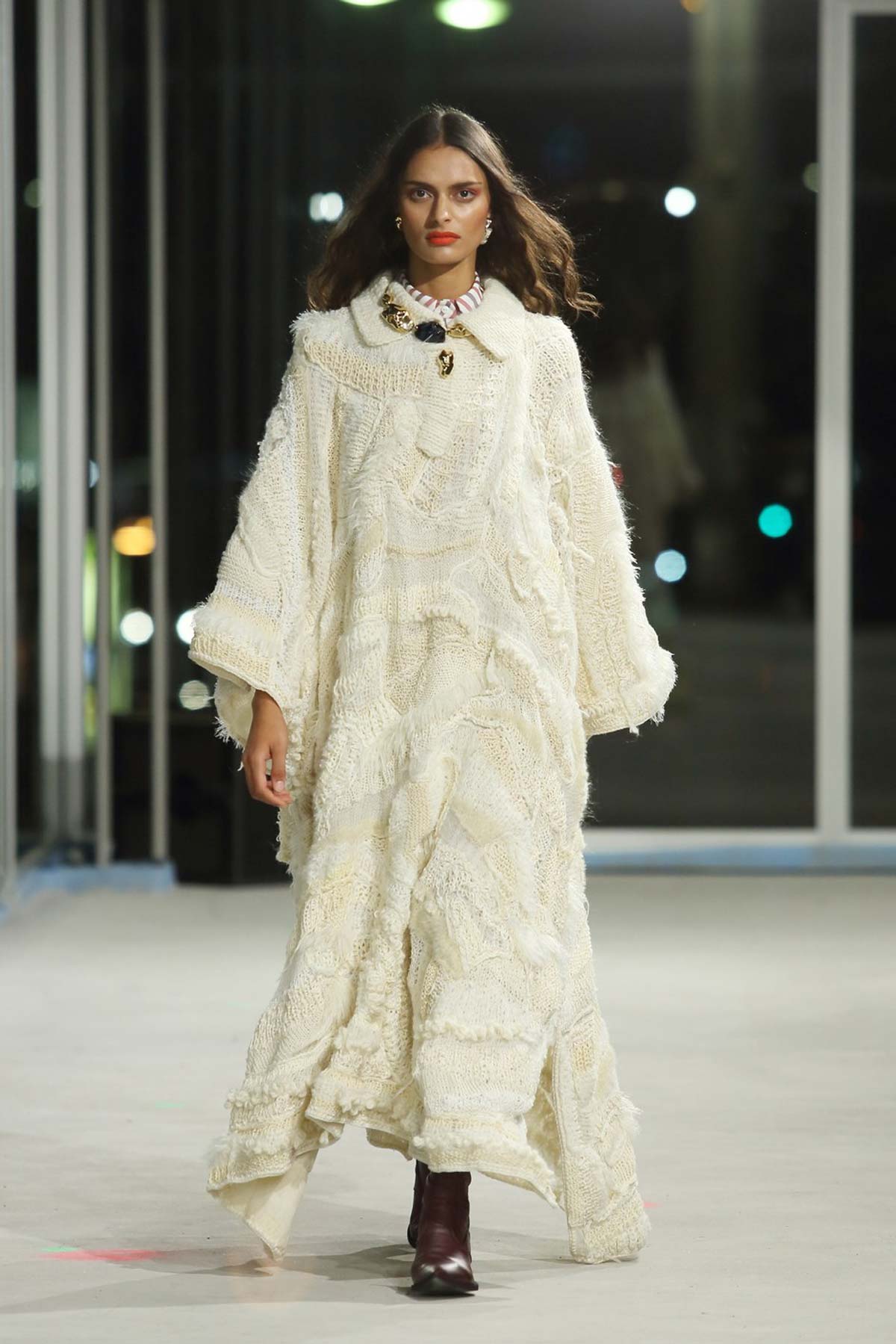
Concretely, this means:
- ✓ Abandonment of classic western darts and seams
- ✓ Volumetric draping over two-dimensional pattern logic
- ✓ Negative space – fabric emerges between body and silhouette
- ✓ Asymmetry as a construction principle, not as decoration
- ✓ Consistent dissolution of gender boundaries in the cut
- ✓ Focus on technical wool qualities and crepe fabrics with drape
The principle behind it carries a Japanese name: “Ma” (間) – the conscious emptiness between two elements. Yohji Yamamoto built his entire pattern philosophy on this, Bobkova translates it into crepe draping. While established houses like Dior or Gucci work with couture seams and body-shaping construction, Bobkova takes the opposite approach: the fabric falls, drapes, floats. The result are garments that function regardless of body type – a significant difference from the western couture DNA.
Bobkova vs. western pattern logic in direct comparison
| Merkmal | Bobkova / Japanese School | Westliche Couture-Tradition |
|---|---|---|
| Schnittprinzip | Zweidimensional, drapiert | Three-dimensional, body-shaping |
| Pleats | Minimal bis keine | Constitutive for silhouette |
| Gender assignment | Consciously undone | Clearly binary encoded |
| Volumen | Negative Space, Luft | Tailoring, Focus |
| Materialfokus | Technical fabrics, fall | Edle Stoffe, Struktur |
| Seasonal commitment | Zeitlos angelegt | Trendgetrieben |
| Referenzraum | Yamamoto, Kawakubo, Antwerp | Dior, Balenciaga, Saint Laurent |

Die Herbstkollektion: Erntezeit als visuelle Klammer
More than 30 looks were presented by Bobkova on the Berlin runway – inspired by nature and the ripe fruits of harvest time. The color palette consistently follows this logic: beige, off-white, rich wine and muted plum tones. No bright colors, no seasonal statements – instead, a color system that works just as well in five years as it does today. This is anti-trend positioning in its purest form and the reason why the pieces don’t burn out in the trend cycle like at NA-KD or in the volume market of Zalando.
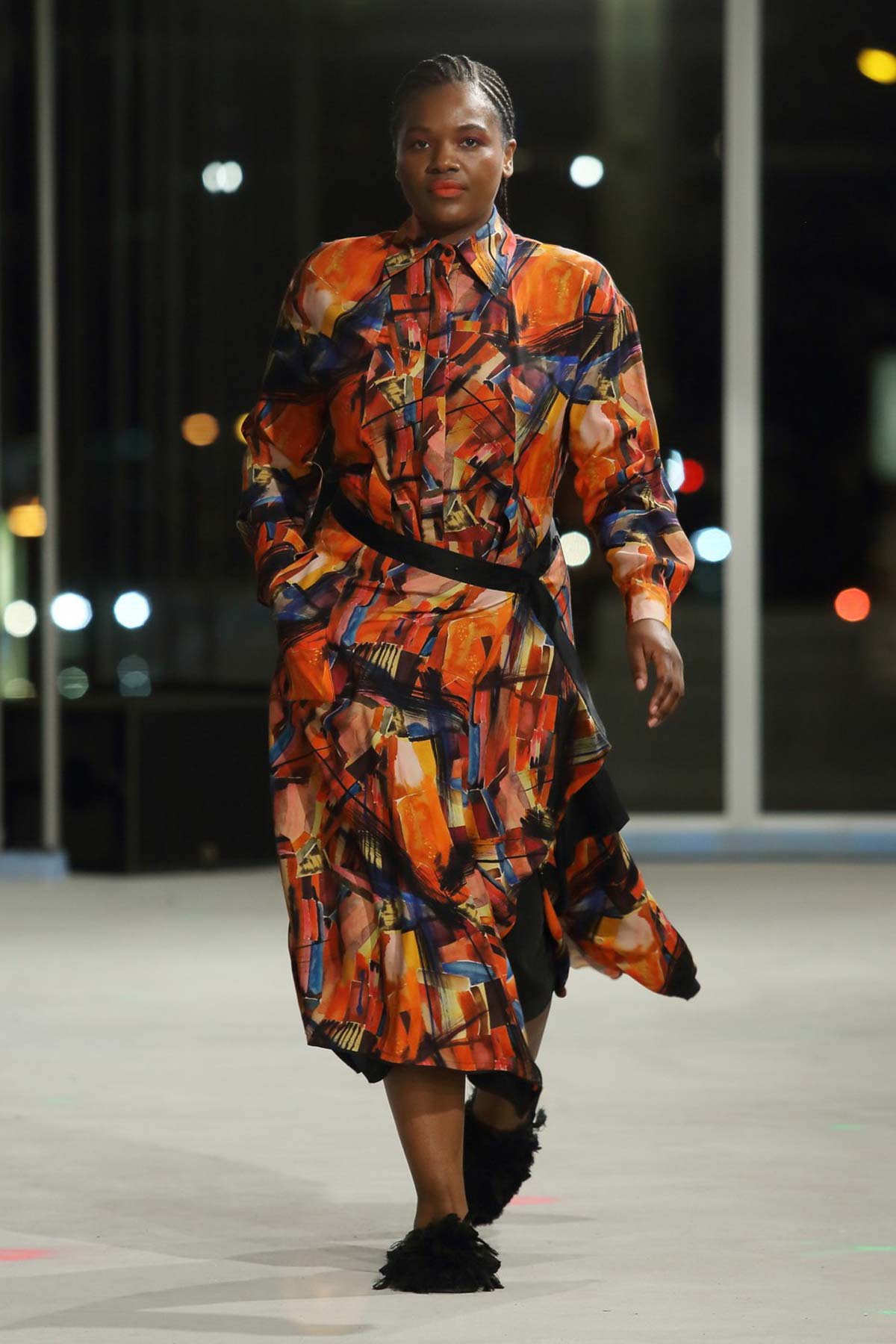
Especially noticeable: prints that show stylized fields and orchards, and individual key looks are adorned with them. These prints are not just decoration, but tell a story about soil, home and cycle – a reading that is not coincidental in the context of the designer’s origin. Those who are print-affine and looking for alternatives to classic animal prints will find an unusually narrative variation here.
Three Looks That Will Stay
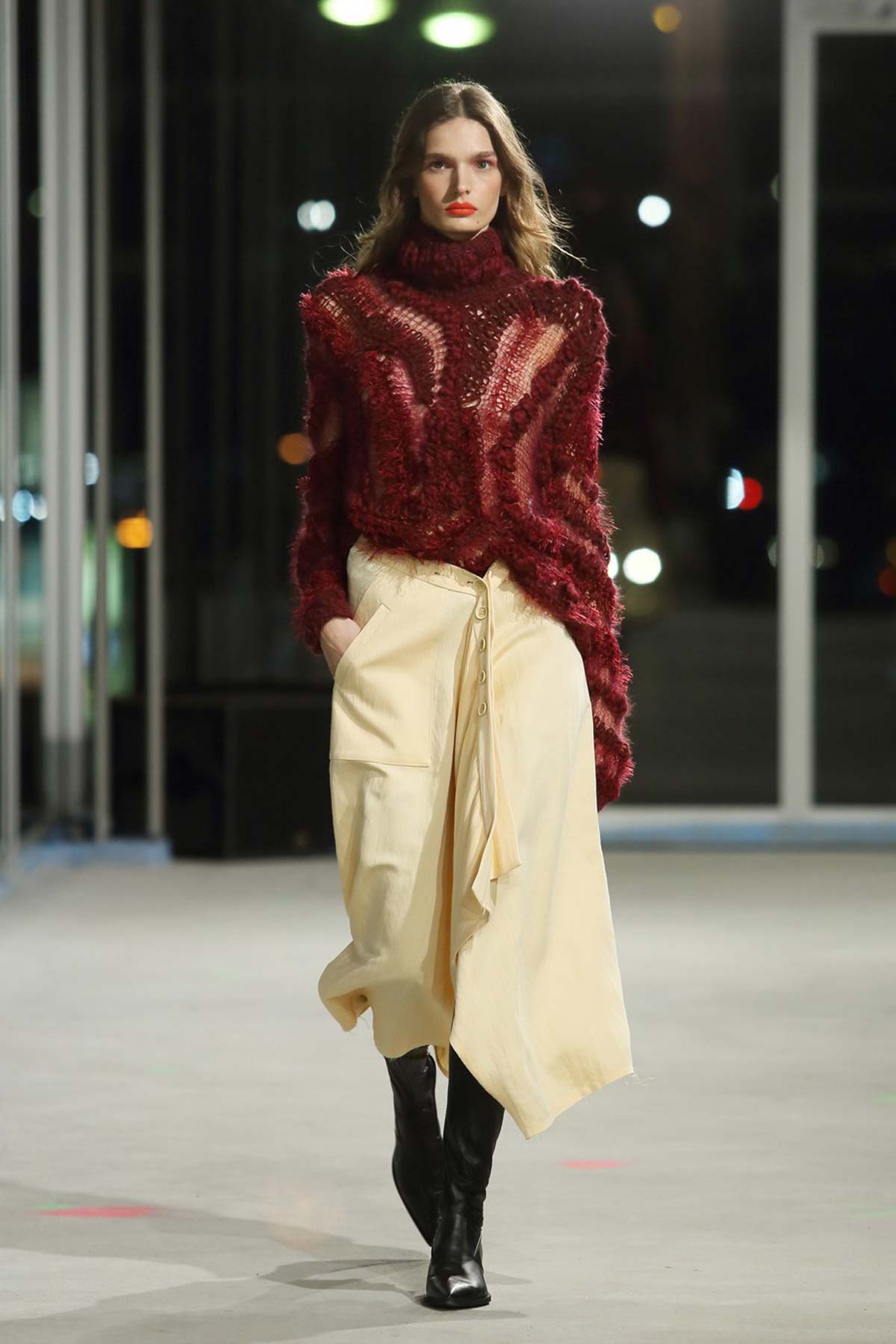
Out of the more than 30 looks, three stand out: a cream-colored oversized tailoring set that exemplifies Japanese tailoring logic – shouldered, hip-hiding, without a single classic dart. A dark wine ensemble with asymmetrical draping on the upper body, making the Antwerp influence tangible. And a look with a harvest field print, which makes the conceptual thread of the collection visible.
Photos: Boris Marberg
The Complete Fashion Show in Video
Who wants to watch the entire show in motion will find the recording of the runway here:
Kristina Bobkova: 25 Years of Brand Leadership Against Every Economic Cycle
At 23, Kristina Bobkova founded her label – that was in 1998. This makes Bobkova older than almost every other Ukrainian brand with international ambitions. While the younger generation is now featured in international fashion press, Bobkova’s brand built itself quietly over two decades. This is the prerequisite for a brand not to burn out in the trend cycle – a risk that streetwear-driven labels constantly face.
Notable is the operational consequence: The atelier in Kyiv remained productive even after the war began – a central difference to labels that moved to Paris or Lisbon. Whoever buys a Bobkova piece is buying something that was made in a country with air raid alerts. This reality is not marketing, but a production factor. Structurally closer to houses like Prada or DKNY than to the fast-paced mainstream à la Pimkie. Even when compared to brands from the overview with D or with P, the aesthetic independence becomes clear.
Genderless, before it was called Genderless
Bobkova’s signature is the consciously gender-neutral line – looks that work just as well for men’s fashion enthusiasts as for the female clientele. This approach was already part of the DNA in the mid-2010s, long before the market found a response. Today, the mainstream is catching up – Bobkova has been there for a long time.
The collections rethink gender-specific stereotypes in clothing – with a focus on technological fabrics and unusual craftsmanship.
Where can you get Bobkova – and at what price?
The direct source of supply is the brand’s own online shop. Availability through major German retailers like Zalando or mass retailers like NA-KD is deliberately not established – that would be a break with the brand’s positioning. Instead, the approach is through concept stores that curate Ukrainian designers: in Berlin Andreas Murkudis and Voo Store, in Vienna Park, in Copenhagen Storm.
Priced within the upper premium segment: tailoring pieces starting from the mid-three-digit range, statement coats in the low four-digit range, simpler knit and jersey pieces starting from the lower three-digit range. This positions it clearly below houses such as Dolce & Gabbana, but distinctly above the designer mid-market. Those interested in the larger fashion markets will also find Fashion and Shopping in New York as well as an Overview of Luxury Shopping in New York with us.
Three reasons why Bobkova has international relevance
First: The brand is conceptually stable. The aesthetic line has evolved since the late 1990s without betraying its identity.

Infused Kitchen at FIV: The new cannabis cooking portal

Cannabis Drinks: Smoothies, Tea, Golden Milk & Recipes

Cannabis Grillen: BBQ, Marinaden & Rezepte für den Sommer
Infused Kitchen: Cannabis recipes for baking, cooking, grilling & drinks

Social Media Ads: More Sales Through Targeted Online Marketing
Career start after studies: What recruiters are really looking for