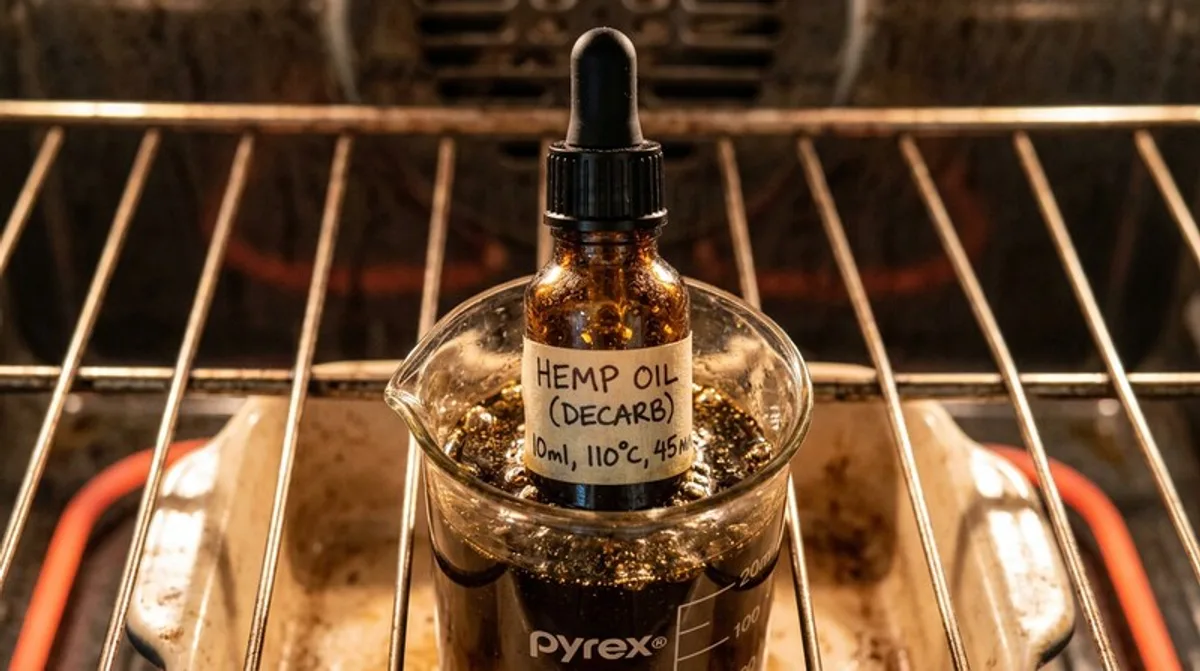
Cannabis Oil Dosage: How Many Drops for Beginners?
Cannabis oil is the preferred method of consumption for many patients — no smoke, discreet consumption, precise dosing. Yet exactly this precision is anything but easy at first: oils vary greatly in concentration, the effect sets in delayed, and too much at once quickly leads to unpleasant experiences. This guide explains how to start correctly and adjust the dose step by step.
CBD Oil vs. THC Oil: Basic Difference
Before anything else about dosing, the distinction is important:
- CBD Oil (freely available, e.g. 5% or 10% CBD): Contains less than 0.2% THC, non-psychoactive, available without a prescription. For relaxation, sleep, mild complaints.
- Prescription cannabis extracts containing THC: Products available at pharmacies such as Dronabinol drops or standardized cannabis oils. Contain THC in defined concentrations (e.g. 2.5 mg THC/ml). Only available with a doctor’s prescription.
The dosing logic differs fundamentally: With CBD oil, the tolerance threshold is very high, overdoses may lead to fatigue at most. With THC-containing products, titration is crucial — too much THC can lead to panic attacks, dizziness, and strong sedation.
Calculating THC Content: mg per Drop
Many patients fail to calculate the actual THC content of their drops. Here’s how to do it:
Formula: mg THC per drop = (ml per drop × concentration % × 1000) ÷ 100
One drop is approximately 0.05 ml. Example: 2.5% THC oil → 0.05 × 2.5 × 1000 ÷ 100 = 1.25 mg THC per drop.
Common prescription-only products:
- Dronabinol drops 2.5%: approximately 1.25 mg THC/drop
- Dronabinol drops 5%: approximately 2.5 mg THC/drop
- Standardized full-spectrum extracts: concentration is stated in the package insert in mg/ml
Titration: The Only Meaningful Method
Titration means: gradually introducing, observing the body’s reaction, increasing step by step. This is especially important for THC-containing products.
Proven beginner’s scheme:
- Weeks 1–2: 1 drop (approximately 1.25 mg THC with 2.5% oil) in the evening, 1–2 hours before bedtime
- Weeks 3–4: If well tolerated, increase to 2 drops in the evening
- From week 5 onwards: A second dose in the afternoon may be possible, if therapeutically necessary
- Target dose: Individual, typically 5–15 mg THC/day for pain patients — according to medical instructions
Never increase the dose as long as unwanted effects are present. Never change more than one variable at a time (dose or timing, not both at the same time).

Administration: Sublingual vs. Swallowing
Administering under the tongue (sublingual) is more effective than swallowing cannabis oil directly:
- Sublingual: Oil under the tongue, hold for 60–90 seconds, then swallow. Onset of effect: 15–45 minutes, higher bioavailability.
- Oral (swallowed): Onset of effect 1–3 hours, significantly slower. Higher risk of “overdosing” because the effect takes too long to appear.
The most common mistake: Patients take a second dose after 30 minutes because “nothing has happened” — then both doses act together and the effect becomes overwhelming. Always wait for the full waiting time (at least 90 minutes when taken sublingually).
Dosing CBD Oil: Simpler Rules
With CBD oil (without THC or with minimal amounts), dosing is less critical:
- Beginners: 1–2 times daily 5–10 mg CBD (equivalent to approximately 2–4 drops of a 5% oil)
- Intermediate: 20–40 mg CBD daily, split into 2 doses
- High (e.g. for inflammation, sleep problems): 40–80 mg/day, after consultation with a doctor
CBD oil works cumulatively — the full effect is often only noticeable after 2–4 weeks of continuous use.
Common Mistakes When Taking Cannabis Oil
- Too high starting dose: Classic among impatient beginners. Leads to panic attacks, dizziness, strong sedation.
- Inconsistent intake times: The body adapts better to fixed times — dosing should occur at the same time every day.
- Ignoring meals: Fatty meals significantly increase THC absorption. The same dose on an empty stomach can have a completely different effect.
- No documentation: Those who do not write down dose, time, and effect cannot perform meaningful titration.
Those who take cannabis orally and want to know how THC differs from CBD: CBD vs. THC: Difference and Effect. For the correct dosing philosophy for all forms of administration: Cannabis Microdosing. Patients who want to apply for a prescription: Cannabis on Prescription.
Oil is only one of several forms of administration: Cannabis Consumption Methods: Smoking, Vaporizer, Edibles and Oil Compared — all alternatives compared.
When it comes to dosing, the product form is crucial: CBD Full Spectrum, Broad Spectrum and Isolate: The Differences — whether full spectrum, broad spectrum or isolate influences how the dose works.
Frequently Asked Questions About Cannabis Oil Dosing

Infused Kitchen at FIV: The new cannabis cooking portal
Cannabis Drinks: Smoothies, Tea, Golden Milk & Recipes
Cannabis Grillen: BBQ, Marinaden & Rezepte für den Sommer
Infused Kitchen: Cannabis recipes for baking, cooking, grilling & drinks

Social Media Ads: More Sales Through Targeted Online Marketing

Career start after studies: What recruiters are really looking for