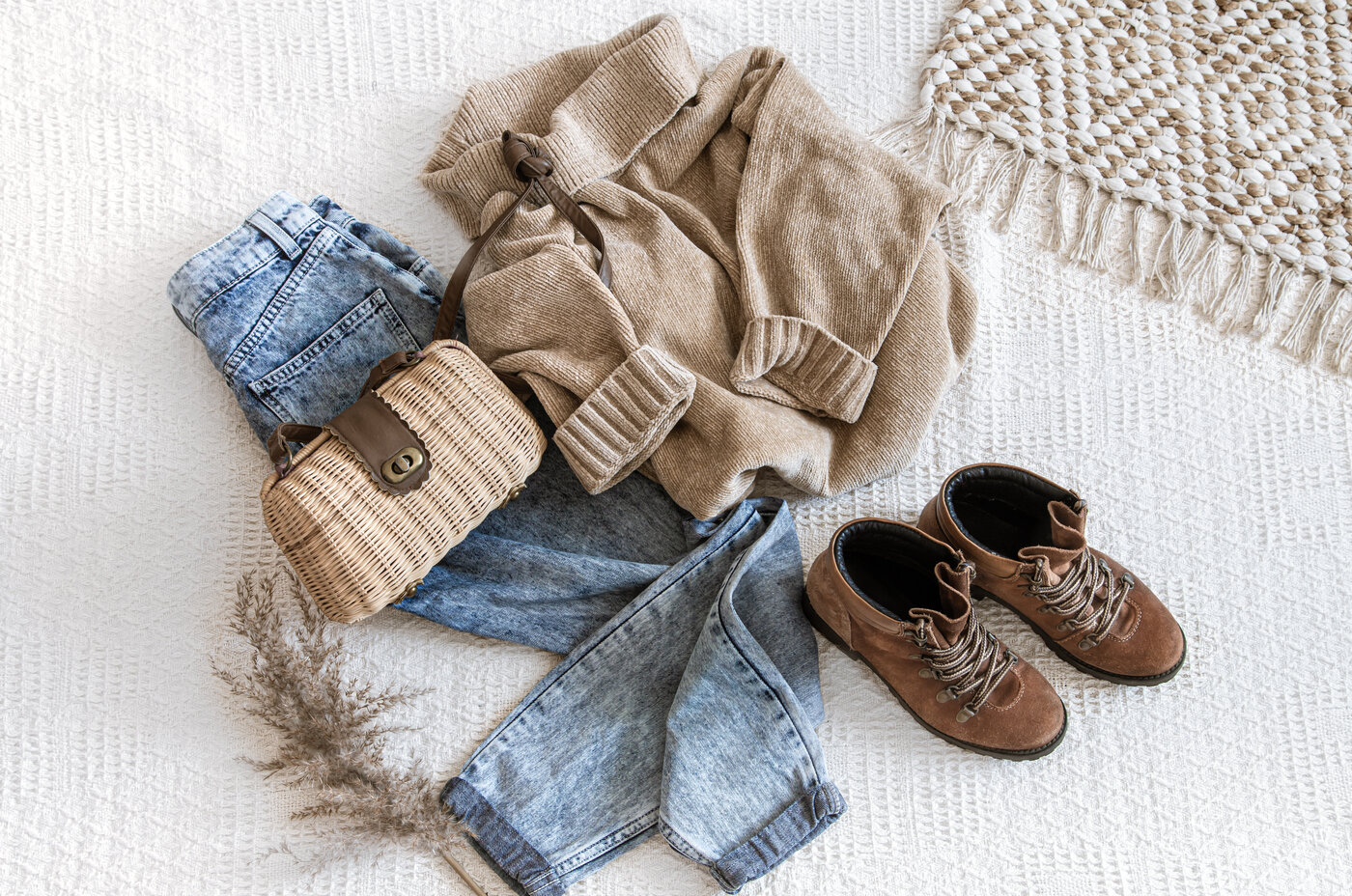
Declutter your wardrobe: How to let go of old clothes
Decluttering is not a tedious chore – it is one of the most liberating activities you can do for yourself. An overcrowded wardrobe costs energy every day: you can’t find anything, you still buy too much, and 80 percent of the clothing remains unworn. Once you have decluttered consistently, you won’t want to go back. And those who then shop wisely will find the perfect foundation for a wardrobe that actually works in the concept of Capsule Wardrobe. The next step – the sensible organization of the now manageable wardrobe – is explained in the Closet Organization Guide.
Why decluttering is so difficult – and why we should still do it
The main problem when decluttering is not the physical work – it’s the emotional attachment. The dress from last summer’s vacation, the sweater from the ex, the “it’ll fit again someday” piece. These attachments make letting go difficult. Add to that the phenomenon of sunk cost: you paid money for it, so you have to keep it. That’s a thinking error. An unused piece of clothing in the closet has no value – it takes up space, clarity, and attention.
The opposite effect occurs once you’ve decluttered: the closet is organized, getting dressed goes faster, and interestingly enough, a smaller wardrobe feels more luxurious visually. Fewer items, but all of them are actually worn – that’s the core of a functional wardrobe.
Preparation: How to start decluttering properly
Before the first reach into the closet, prepare three things:
- Plan time: A complete wardrobe takes two to four hours. Whoever has too little time will break off in the middle – the result is then more chaotic than before.
- Prepare containers: Three piles or bags: keep, give away/sell, dispose of. No “maybe” pile – it leads to nothing.
- Empty everything out: Don’t sort inside the closet. Lay all pieces on the bed or the floor. The volume makes you consciously aware of how much you actually have – and that is often alarming.
The KonMari Method: Everything That Brings Joy
Marie Kondo’s approach is simple and effective: Take each piece of clothing individually in your hand and ask: “Does it bring me joy?” If not – give it away. Sounds soft, but it works: The physical gesture of taking it into your hand activates a more honest emotional reaction than just looking at it in the closet.
Important: The KonMari Method recommends going through clothing by category – not by room. All shirts together, all pants together, all jackets together. This way you can see at a glance which type you own eight pieces of and really only need two.
Comparison of the Three Rule-of-Thumb Systems
| Method | Rule | Best for |
|---|---|---|
| 12-Month Rule | Not worn in 12 months = out | Quick decisions, clear limit |
| 5-Combination Rule | Not combinable with 5 items = out | Statement pieces, check individual items |
| Doubt Method | Three seconds hesitation = No | Quick emotional clarification |
The combination of all three methods works best: First, the 12-Month Rule for obvious candidates, then the 5-Combination Rule for borderline cases, finally the Doubt Method for everything that’s left over.


Special Categories: What Many Forget
Alongside visible clothing items, there are areas that are regularly forgotten when decluttering:
- Socks and Underwear: Anything with holes, worn-out cuffs, or more than three years old – throw it away. No “for at home” pile that grows endlessly.
- Bags and Handbags: These are just as rarely discarded as they are purchased. If a bag has been unused in the closet for more than 12 months, it no longer has a place there.
- Accessories: Scarves, belts, Jewelry – quickly forgotten, often duplicated. Same rules, same consequences.
- Sportswear: Many own sportswear for activities they no longer engage in. If you haven’t been active for more than a year – throw it away.
What to Do with Discarded Clothing?
Discarded clothing has clearly more options than trash – and some of them offer real value in return:
| Option | Ideal for | Aufwand |
|---|---|---|
| Vinted / Kleinanzeigen | Markentextilien, gut erhalten | Mid (photos, description) |
| Clothes swap with friends | Alles in gutem Zustand | Niedrig |
| Caritas / Kleiderkammer | Functional everyday clothing | Niedrig |
| H&M Return | All kinds of used textiles, even broken ones | Sehr niedrig |
| Upcycling | Stoff-Basics, alte Jeans, Shirts | Hoch (aber kreativ) |
After Decluttering: Reorganizing the Wardrobe
Now that the closet is manageable, the really important part begins: What should go into the gaps? The most common source of error here is impulsive repurchasing. Instead: first analyze what is actually missing – and then deliberately buy the piece that can be combined with at least five other items. This is the core of the capsule wardrobe principle.
How to optimally structure the closet after decluttering is explained step by step in the Closet Organization Guide: divide into zones, apply folding techniques, use aids sensibly.
How often should you declutter?
| Occasion | Recommendation |
|---|---|
| Regular Care | Twice a year (spring + autumn) during the seasonal change |
| After big purchases | One-in-one-out: What’s new must replace an old piece |
| After life changes | New job, move, different body shape – actively adjust your wardrobe |
FAQ: Decluttering your wardrobe
- Was mache ich, wenn ich mich von einem Teil nicht trennen kann, obwohl ich es nie trage?
- Den Probier-Box-Trick anwenden: Das Teil in eine Box packen, sechs Monate lagern. Wenn man in dieser Zeit nicht danach sucht, wird die Box ungeöffnet abgegeben. Die Entscheidung wird damit zeitlich nach hinten verschoben – und fällt dann fast von alleine.
- Wie gehe ich mit teuren Fehlkäufen um?
- Das ist ein klassischer Sunk-Cost-Fehler: Das Geld ist bereits ausgegeben, egal ob das Stück im Schrank hängt oder nicht. Wer etwas nie trägt, weil es nicht passt oder nicht gefällt, verliert durch Behalten keinen Cent zurück – gibt aber täglich Platz und Aufmerksamkeit ab. Verkaufen oder abgeben ist die rationalere Entscheidung.
- Sollte ich vor dem Ausmisten eine Methode wählen oder einfach loslegen?
- Einfach loslegen ist besser als wochenlange Vorbereitung. Die KonMari-Methode liefert einen guten Rahmen, aber jede Methode funktioniert, die dazu führt, dass Entscheidungen tatsächlich getroffen werden. Der häufigste Fehler ist nicht die falsche Methode, sondern der nicht begonnene Prozess.
- Kann ich Kleidung spenden, auch wenn sie Gebrauchsspuren hat?
- Kleiderkammern und Caritas nehmen saubere, tragbare Kleidung an – auch mit leichten Gebrauchsspuren. Stark beschädigte Textilien können bei H&M oder ähnlichen Rücknahmeprogrammen abgegeben werden, die sie recyceln. Kleidung mit Flecken oder Löchern gehört nicht in Spendenboxen.
- Wie verhindere ich, dass sich der Schrank nach dem Ausmisten wieder füllt?
- Die One-in-one-out-Regel konsequent anwenden: Jedes neue Kleidungsstück ersetzt ein vorhandenes. Zusätzlich vor jedem Kauf die 5-Kombinations-Frage stellen: Mit welchen fünf Teilen im Schrank kann ich das neue Stück kombinieren? Wenn keine fünf Kombinationen möglich sind, ist der Kauf kritisch zu hinterfragen.
{
“@context”: “https://schema.org”,
“@type”: “FAQPage”,
“mainEntity”: [
{
“@type”: “Question”,
“name”: “Was mache ich, wenn ich mich von einem Teil nicht trennen kann, obwohl ich es nie trage?”,
“acceptedAnswer”: {
“@type”: “Answer”,
“text”: “Den Probier-Box-Trick anwenden: Das Teil in eine Box packen, sechs Monate lagern. Wenn man in dieser Zeit nicht danach sucht, wird die Box ungeöffnet abgegeben.”
}
},
{
“@type”: “Question”,
“name”: “Wie gehe ich mit teuren Fehlkäufen um?”,
“acceptedAnswer”: {
“@type”: “Answer”,
“text”: “Das ist ein klassischer Sunk-Cost-Fehler. Das Geld ist bereits ausgegeben. Wer etwas nie trägt, verliert durch Behalten keinen Cent zurück. Verkaufen oder abgeben ist die rationalere Entscheidung.”
}
},
{
“@type”: “Question”,
“name”: “Sollte ich vor dem Ausmisten eine Methode wählen oder einfach loslegen?”,
“acceptedAnswer”: {
“@type”: “Answer”,
“text”: “Einfach loslegen ist besser als wochenlange Vorbereitung. Der häufigste Fehler ist nicht die falsche Methode, sondern der nicht begonnene Prozess.”
}
},
{
“@type”: “Question”,
“name”: “Kann ich Kleidung spenden, auch wenn sie Gebrauchsspuren hat?”,
“acceptedAnswer”: {
“@type”: “Answer”,
“text”: “Kleiderkammern nehmen saubere, tragbare Kleidung an – auch mit leichten Gebrauchsspuren. Stark beschädigte Textilien können bei H&M Rücknahmeprogrammen abgegeben werden.”
}
},
{
“@type”: “Question”,
“name”: “Wie verhindere ich, dass sich der Schrank nach dem Ausmisten wieder füllt?”,
“acceptedAnswer”: {
“@type”: “Answer”,
“text”: “Die One-in-one-out-Regel konsequent anwenden: Jedes neue Kleidungsstück ersetzt ein vorhandenes. Zusätzlich die 5-Kombinations-Frage vor jedem Kauf stellen.”
}
}
]
}

Infused Kitchen at FIV: The new cannabis cooking portal

Cannabis Drinks: Smoothies, Tea, Golden Milk & Recipes

Cannabis Grillen: BBQ, Marinaden & Rezepte für den Sommer
Infused Kitchen: Cannabis recipes for baking, cooking, grilling & drinks

Social Media Ads: More Sales Through Targeted Online Marketing

Career start after studies: What recruiters are really looking for