Entourage effect: How cannabinoids & terpenes interact
- Full-spectrum needs lower dose than CBD isolate for same effect, according to study
- Terpenes such as myrcene, limonene and beta-caryophyllene directly modulate THC and CBD effects
- 23 cannabinoids + dozens of terpenes – making full-spectrum stronger than any single substance
The entourage effect: definition and origin
The term entourage effect was coined in 1998 by the Israeli researchers Mechoulam and Ben-Shabat. It describes the phenomenon that cannabis ingredients (cannabinoids, terpenes, flavonoids) work together synergistically and produce stronger or qualitatively different effects than the individual substances in isolation.
The basic idea: the nature of the cannabis plant cannot be explained pharmacologically by a single molecule (THC or CBD). In studies, full-spectrum extracts show different – often stronger – effect profiles than isolates with an equivalent cannabinoid concentration.
Scientific evidence for the entourage effect
| Study | Comparison | Result |
|---|---|---|
| Ben-Shabat et al. 1998 (Eur J Pharmacol) | 2-AG alone vs. 2-AG + entourage substances | Entourage substances significantly increase 2-AG binding affinity to CB receptors |
| Blasco-Benito et al. 2018 (Biochem Pharmacol) | CBD isolate vs. full-spectrum CBD-rich extract, breast cancer cell lines | Full-spectrum extract significantly more effective in apoptosis induction than equivalent CBD dose isolated |
| Pamplona et al. 2018 (Front Neurol) | CBD isolate vs. full-spectrum CBD in epilepsy patients, retrospective | Full spectrum: lower dose required for same seizure reduction; wider therapeutic window |
| Russo 2011 (Br J Pharmacol) | Terpene-cannabinoid interactions, Review | Terpenes directly modulate CB1/CB2, serotonin, GABA, dopamine systems; 6 terpenes with proven pharmacological activity identified |
How terpenes alter the cannabinoid effect
Myrcene: Increases blood-brain barrier permeability → THC reaches the brain faster and in higher concentrations. Explains the popular saying “Mango before the joint increases the high” – mango contains myrcene.
Linalool: Has an anxiolytic effect itself via GABA-A modulation. In combination with CBD, it synergistically potentiates the anxiolytic effect.
beta-Caryophyllene: The only terpene that directly binds CB2 (partial agonist). In combination with THC/CBD, additive inhibition of inflammation via CB2.
alpha-Pinene: AChE inhibitor (similar to Alzheimer’s drugs such as donepezil). Can partially compensate for THC-induced short-term memory impairment.
Limonene: 5-HT1A agonism – synergistic with CBD for anxiety and depression.

Full spectrum vs. broad spectrum vs. isolate
| Type | Content | Entourage effect | When it makes sense |
|---|---|---|---|
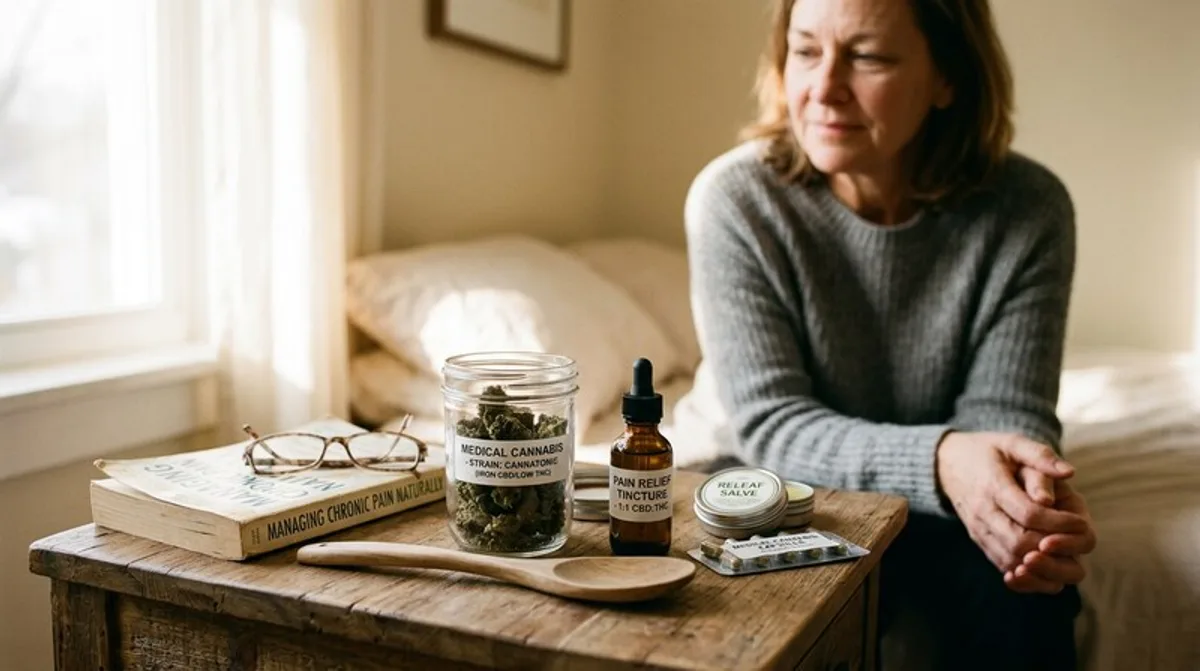
| Full spectrum | THC + CBD + all cannabinoids + terpenes + flavonoids | Full (strongest) | Maximum effect, no doping test, no allergies |
| Broad spectrum | CBD + all cannabinoids except THC + terpenes | High (without THC synergism) | Athletes (WADA), pregnant women with medical clearance, no high wanted |
| CBD isolate | Pure CBD (99%+) | None | Precise dosage, known effect, most sensitive patients |
Flavonoids: the underestimated class
Cannabis also contains flavonoids (cannflavin A and B) which play a pharmacological role:
– Cannflavin A and B: 30× more anti-inflammatory than aspirin in cell models (Barrett 1986)
– Quercetin, apigenin: antioxidant, synergistic with CBD
– Flavonoids are better preserved with CO₂ extraction than with ethanol extraction
CBG: The mother of all cannabinoids - Cannabis microdosing
FAQ: Entourage effect
Summary
The entourage effect describes the synergistic effect of all cannabis ingredients. In studies, full-spectrum extracts show stronger effect profiles than isolates at equivalent cannabinoid doses. Terpenes are pharmacologically active: myrcene (THC uptake), linalool (anxiolysis), beta-caryophyllene (CB2 agonist), alpha-pinene (cognition protection). For most medical applications, full spectrum is the most sensible choice. Variety guide for terpene profile selection; CBD dosage guide for full-spectrum vs. isolate strategy.
Cannabis for restless legs: CBD, dopamine & studies
Cannabis & bones: CB2, osteoporosis & bone healing
Cannabis & testosterone: effect on male fertility
Cannabis quality: laboratory tests, pesticides & contamination
Home cannabis cultivation: rules according to CanG
Cannabis microdosing: low doses of THC & CBD